

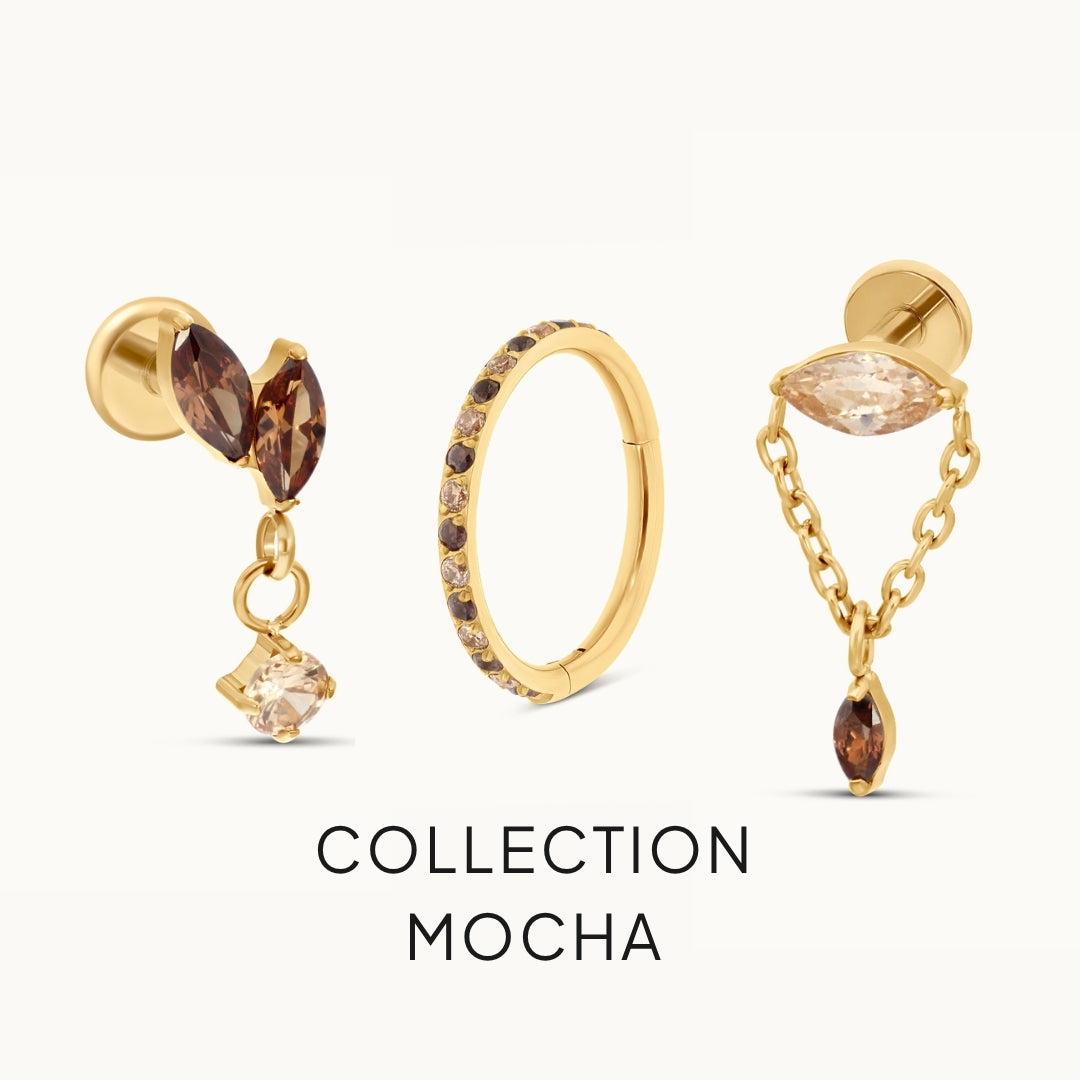


When and How to Safely Change Your Earrings
Changing your earrings safely matters, especially if you have sensitive ears. The right method helps prevent infection and supports healthy healing for your ear piercing. This guide covers best practices for handling your earrings safely, with a focus on 316L surgical steel, known for how well it suits sensitive skin.
316L Surgical Steel: The Ideal Material for Earrings
The Hypoallergenic Properties of Surgical Steel
316L surgical steel is highly recommended for people with sensitive ears, thanks to its exceptional properties:
- Hypoallergenic: this steel is known for being unlikely to trigger allergic reactions, making it ideal for anyone prone to skin reactions like irritation, inflammation, redness or infection.
- Non-corrosive: it resists corrosion, rust and everyday wear, essential for jewelry worn daily and exposed to all kinds of elements.
- Strong: its high resistance means jewelry made from this material lasts a long time without warping or breaking.
- Meets safety standards: 316L surgical steel meets strict international standards for skin contact, for reliable, everyday safety. You can wear 316L surgical steel earrings with total peace of mind.
You can only wear earrings once your lobes are fully healed. If your ear piercing is recent, we recommend wearing ASTM F-136 titanium. Once your lobes are healed, you can absolutely swap your titanium starter jewelry for a beautiful pair of earrings.
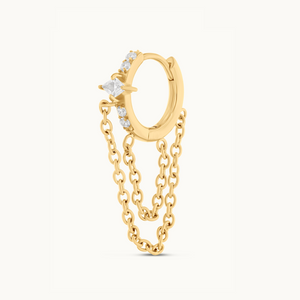
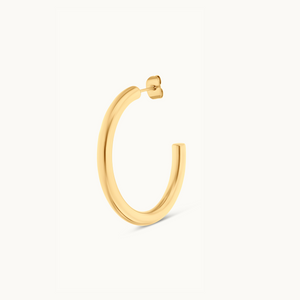
Comparing With Other Materials:
- ASTM F-136 titanium is also hypoallergenic and lightweight. Unlike 316L surgical steel, ASTM F-136 titanium is also used for cartilage piercings. You can absolutely wear ASTM F-136 titanium jewelry in your lobes too, though we'd call this a hoop or labret piece rather than an earring.
- 14k and 18k gold: 14k and 18k gold are excellent choices for piercing jewelry, thanks to their strength and warm golden colour. This metal resists scratches and everyday wear well, and its biocompatibility makes it ideal for anyone sensitive to certain metals. 14k and 18k gold jewelry costs more than 316L surgical steel or ASTM F-136 titanium.
When Should You Change Your Earrings?
Choosing the right time to change your earrings after a piercing matters for healing and avoiding complications. Here are a few general recommendations:
- Right after the piercing: keep the jewelry your piercer fitted in place for the entire initial healing period. For lobes, this generally takes 6 to 8 weeks, or more; for cartilage, it can take around 6 to 9 months, or more.
- Check for healing: before changing your earrings, make sure your lobe piercing is completely healed, with no redness, pain, swelling or discharge.
- Consult a professional: if you're unsure whether your ears are healed, it's best to consult a professional piercer before changing your earrings for the first time.
- Once your lobe piercing is completely healed, you can choose simple or elegant earrings, such as hoops or drops
How to Change Your Earrings Safely
Following a safe, hygienic process when changing your earrings is essential for keeping your piercings healthy. Here's a step-by-step guide:
1) Wash your hands: before touching your earrings, wash your hands thoroughly with water and antibacterial soap.
2) Disinfect the new earrings: clean the new earrings with a saline solution. Avoid harsh products like disinfectant on your earrings.
3) Prepare the piercing hole: using a sterile gauze pad, clean the pierced area with saline solution to remove any bacteria or build-up.
4) Change the earrings:
- Gently remove your current earrings.
- Immediately insert the new earrings (studs, hoops, drops) to prevent the holes from closing up.
- Make sure to handle the jewelry by the parts that won't come into contact with the piercing.
5) Watch your earrings after the change: keep an eye on your lobe piercings, and consult a professional if you notice any sign of a reaction, like redness or irritation.
FAQ: Everything About Earrings
What Are the Benefits of Choosing Surgical Steel for My Lobes?
Surgical steel is known for its hypoallergenic properties, making it ideal for people with sensitive skin or a tendency toward allergies. Its resistance to corrosion and rust means it lasts a long time, even with everyday wear, and its strength makes it less likely to warp or break, for added peace of mind while wearing it.
Can You Wear 316L Surgical Steel in a Cartilage Piercing?
We don't recommend 316L surgical steel for cartilage piercings. For those, we recommend titanium jewelry that meets the ASTM F-136 standard instead. 316L surgical steel is better suited to fully healed earlobes.
How Do You Know If You're Allergic to Certain Metals?
Signs of a metal allergy can include itching, redness, rashes or swelling on or around the piercing. If you notice these symptoms, we recommend consulting a healthcare professional.
Why Are Earrings So Popular?
Earrings offer a huge range of styles that can complement or enhance your look, and let you switch things up with ease. They can also be worn for any occasion, formal or casual, adding a finishing touch to any outfit.
Can You Sleep With Earrings In?
Sleeping with earrings in is possible, especially if they're small and don't have protruding parts that could be uncomfortable or cause irritation while you sleep. If your ear piercing is recent, it's important not to remove your starter jewelry.
Can You Wear Earrings During Sports or in the Water?
Yes, you can wear earrings during sports or in the water, as long as you choose a resistant material like 316L surgical steel, which doesn't react to chlorine or salt water. Just make sure your earrings are securely fastened so you don't lose them.
We've covered why 316L surgical steel is ideal for sensitive ears, and how to change your earrings safely. Explore our full range of 316L surgical steel earrings on our site to find elegant, safe options suited to your needs.

