

Tragus Piercing: Pain, Healing, Jewelry Types, and More
Deciding to get a new piercing can sometimes feel complicated, but being well informed makes it much easier to take the leap. Today we're talking about an unmissable ear piercing.
Most piercing enthusiasts choose the tragus piercing for its subtlety, its originality, and its delicacy. The tragus piercing has actually become one of the most requested piercings lately!
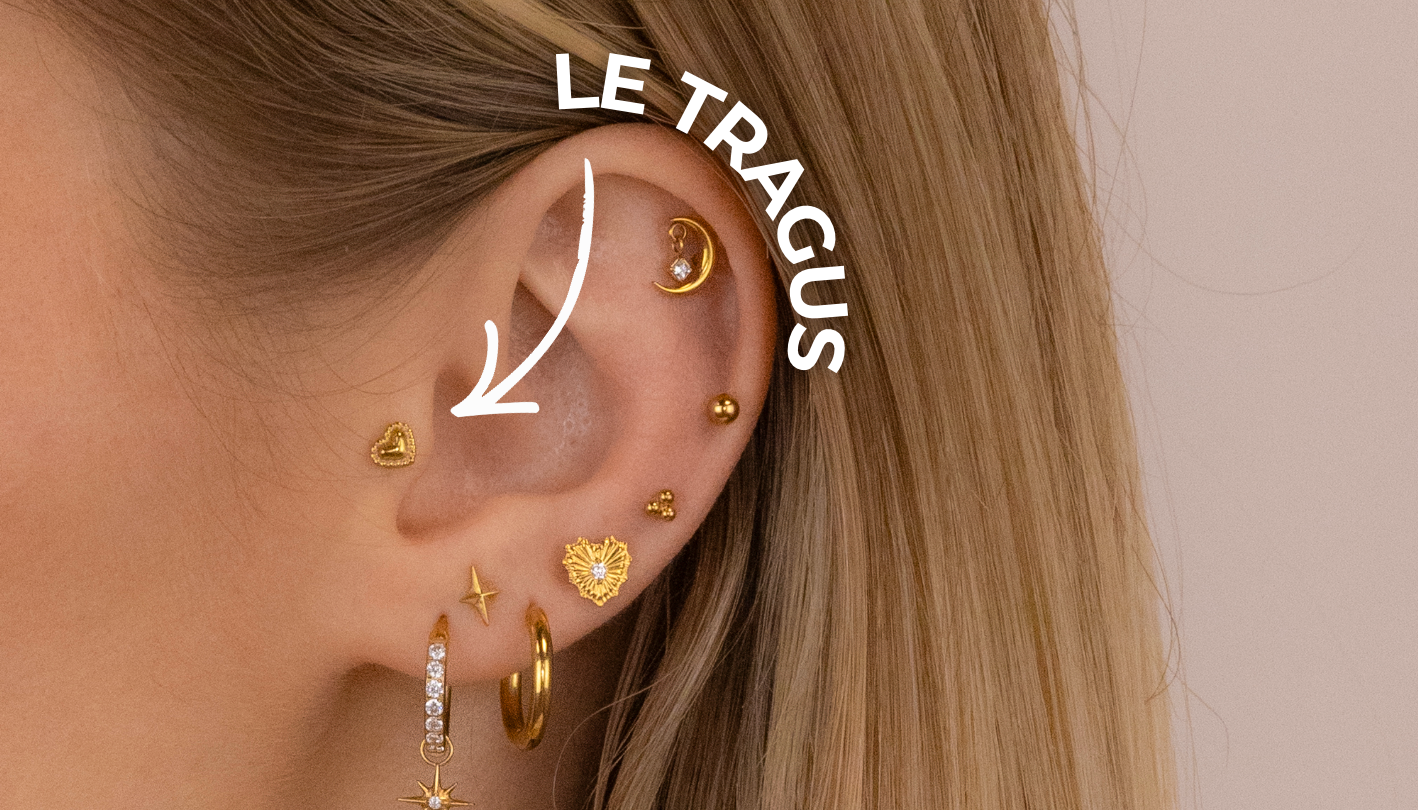
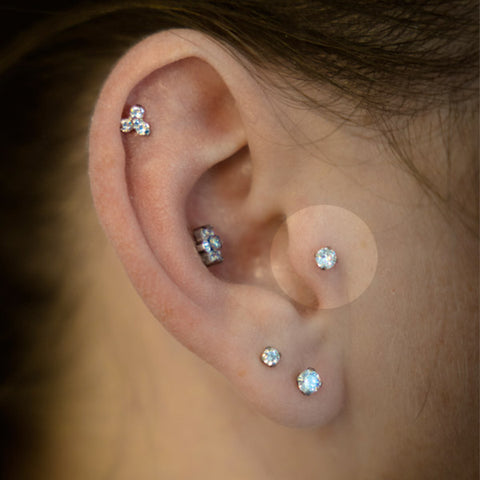
It's a name you might not know yet. The tragus is that small anatomical structure made of cartilage and covered in skin that you touch as soon as your fingers get near your ear.
This small, rounded or triangular flap sits on the surface of the outer ear and protects the opening of the ear canal.
Your tragus piercing is therefore visible to everyone! Which is perfect, because we have plenty of high-quality pieces to offer you!
Before you dive into your tragus piercing journey, you probably have quite a few questions in mind... How does the piercing actually happen? Will it hurt a lot? What about healing? Which jewelry should I choose for my tragus piercing?
You can rest assured: we've prepared a special guide answering all your questions about the tragus piercing.
Table of Contents
- Tragus Piercing: What to Do Beforehand
- Price of a Tragus Piercing
- Tragus Piercing: How the Piercing Happens
- Tragus Piercing Pain
- What Jewelry Size for a Tragus Piercing
- What Jewelry Material to Choose for the Tragus Piercing
- What Jewelry to Choose for a Tragus Piercing
- Tragus Piercing Healing
- Aftercare Rules for Your New Piercing
- When to Change Your Tragus Jewelry
Tragus Piercing: What to Do Beforehand?
Before getting your piercing, you need to find a piercer who follows the hygiene standards required by the profession. It's important to feel comfortable with the person who will be doing your new piercing.
If you tend to feel nervous, we recommend choosing a patient piercer and letting them know ahead of time if you're worried about staying still once the moment comes.
Check with your piercer which types of jewelry they'll offer for the initial piece: it's always best to favor a higher-quality material like gold or titanium (Careful! ASTM F-136 grade titanium only) to help ensure your new piercing, wherever it is, heals well. Lower-quality materials can be rejected by your body and cause unwanted reactions like inflammation or irritation. In particular, avoid so-called "surgical" steel, especially for ear cartilage piercings. It also won't be possible to wear a hoop from the very start: you'll need to wait for your piercer's go-ahead before wearing a beautiful hoop set with lovely stones (zirconia, opal, natural stone, and more) to avoid irritation and prevent delayed healing.
Take the time to find an experienced piercer and one you trust. When it comes to piercing part of your ear, it's worth caring less about the price and more about the quality. An experienced piercer will know how to make the "procedure" more comfortable and less painful. It's also important to check that hygiene standards are respected in the studio, and that the piercer uses a sterile, single-use needle rather than a piercing gun: getting pierced with a gun can seriously damage your ear cartilage by shattering it around the piercing site instead of cleanly piercing your tragus or other cartilage piercing.
At Obsidian Piercing, we follow hygiene standards to the letter and offer you premium-quality jewelry for your piercings.

Price of a Tragus Piercing
The price of the piercing itself will often depend on where you live, as well as your piercer's experience and reputation. In our piercing studios in France, prices typically fall between €40 and €60, initial jewelry included (this is just a general guide and will naturally vary from piercer to piercer).
Tragus Piercing: How Does the Piercing Happen?
When you want to get a tragus piercing, the piercer first needs to make sure the piercing is actually possible. They check that your tragus is wide enough for the piercing and that you have enough cartilage.
Once they've confirmed it's a go, they disinfect the area, mark the exact spot with a pen, and position the needle they'll use to do the piercing.
Their sterile needle then pierces that part of the ear, and the jewelry can be inserted.
The tragus piercing itself is quick, so don't worry.
Make sure your piercer uses a needle rather than a gun. Piercing guns often harbor bacteria, which can complicate healing.
What Does Tragus Piercing Pain Feel Like?
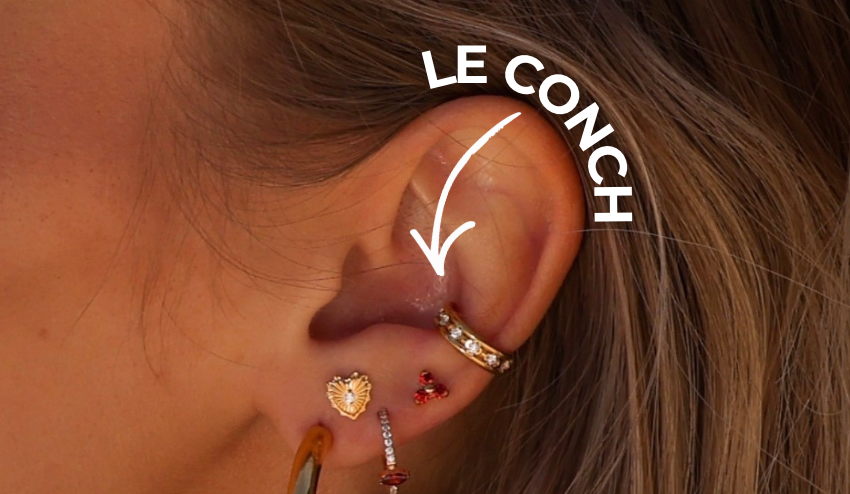
It's the question everyone asks, and the same goes for most other ear cartilage piercings like the helix, the conch, the daith, and more.
If you've ever had a lobe piercing, you probably remember the brief pinch of pain felt at the moment of piercing.
With a tragus piercing, you'll feel a bit more pressure, since the needle has to pass through the cartilage in that part of the ear. The more cartilage you have, the more pressure you'll feel. That said, you'll quickly notice that the tragus is fairly soft and flexible.
Here's some reassurance: the tragus piercing doesn't hurt any more than other cartilage piercings.
Given where the tragus piercing sits, right next to the ear canal, you'll very likely hear a little pop as the needle goes through. That's completely normal. It just means it's already done!
What Jewelry Size for a Tragus Piercing?
Here are the standard sizes used by professional piercers.
|
Jewelry |
Thickness |
Length/Diameter |
|
Tragus with a bar |
1.2 mm |
6/7/8 mm |
|
Tragus with a hoop |
1/1.2 mm |
6 mm |
For more information, visit our size guide page.
The right size for your jewelry will also depend on your taste and the size of your tragus. It's worth discussing with your piercer.
Just remember, it's much easier to stretch a piercing than to shrink it.

What Jewelry Material Should You Choose for the Tragus Piercing?
Nothing is worse than dealing with pain and an infection instead of a beautiful piercing!
Good-quality materials help keep your piercing healthy, without pain, inflammation, or infection.
Using the right materials is essential for proper healing of ear piercings, especially in cartilage, whether that's a helix piercing or a conch piercing.
The question is which ones: our piercers have settled this based on fifteen years of watching how piercings actually heal.
At Obsidian Piercing, we work with gold (14 karat and 18 karat) and ASTM F-136 grade titanium for their superior quality.
These materials are nickel-free and recognized as biocompatible (which means they can be used as initial piercing jewelry).
That said, we don't recommend "surgical" steel. It contains nickel and is less durable than titanium. What's more, only ASTM F-138 grade steel is recognized as biocompatible, so be careful about the quality of surgical steel when you're shopping around. Surgical steel is nonetheless very popular thanks to its low price, but you shouldn't overlook quality for the sake of price: we're talking about materials that could leave you with scarring or infections.

Which Jewelry Should You Choose for a Tragus Piercing?
Cartilage jewelry adds a touch of originality to your style. Its visibility is exactly what makes it so popular. Whether it's for a tragus piercing, a helix piercing, or a conch piercing, take the time to choose your composition carefully.
First, make sure with your piercer that your new piercing is healing well, since you won't be able to swap the labret for a hoop from the very start.
You'll have plenty of options to choose from for a tragus piercing.
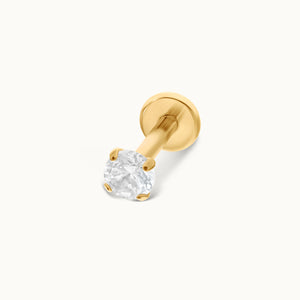
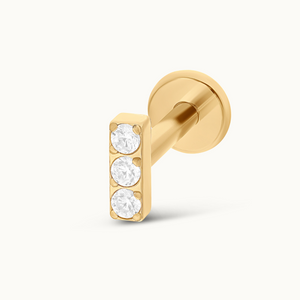
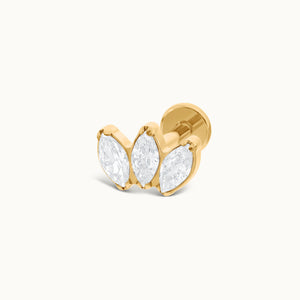
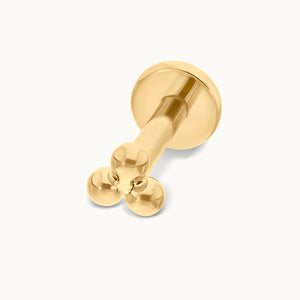
Screw-on labret tops are among the most popular jewelry for this piercing. A prong-set top with a zirconia stone adds a bright, sparkling touch to your composition. Zirconia, opal, natural stone... there are several options to choose from in our jewelry collection. If you want to bring in some color, you could go for a piece set with a beautiful opal, whether pink, white, or blue. The attention to detail you put into choosing your composition will make all the difference to your style.
So you'll have a wide choice between a labret with a screw-on top, a beautiful classic hoop or one set with a stone, a curved barbell you can add a piece to on each side, an opal, a zirconia, a crystal, or a natural stone: you'll find the piece that matches your style.
Pay close attention to the quality of your ear cartilage jewelry: it matters just as much as the look, especially for your skin, which is why you should avoid low-end surgical steel and bargain pieces. So-called "surgical" steel is actually a fairly low-end material, so you need to watch its grade carefully; going for the lowest price could lead to unpleasant surprises. You'll also find plenty of people using the term "surgical" steel for grades of steel that are also used on construction sites.

Tragus Piercing: Healing and Rules to Follow
How Does Tragus Piercing Healing Work?
Healing tends to be fairly straightforward for a cartilage piercing, with no complications, as long as you follow proper hygiene and your aftercare routine.
Expect 6 to 9 months to heal, or more. In some cases, it can take longer.
The better you take care of your tragus piercing, the smoother your healing will go.
If you're ever unsure, don't hesitate to book a check-up visit with your piercer.
Aftercare Rules for a Tragus Piercing
The tragus is a part of the ear that's fairly vulnerable to infection. It sits right at the entrance to the ear canal, which is often full of bacteria. On top of that, it's an area we tend to touch regularly with our hands.
Strict hygiene rules need to be followed to help your tragus piercing heal quickly!
Hygiene Rules
Rule number one: avoid touching your new tragus piercing!
When you do need to touch it, always make sure your hands are freshly washed first.
During the week following your tragus piercing, we recommend caring for it while you shower. Use a saline solution to properly disinfect and clean it.
It's completely normal to feel a little pain in the first few days after getting your tragus piercing.
Don't move your jewelry after getting pierced, especially in the early stages of healing. Doing so can slow healing down and lead to crusting and a higher risk of infection. The same goes for switching to a hoop after 1 or 2 months: twisting it in your ear could damage the cartilage and the healing tissue.
Everyday Rules
Be very careful with your tragus piercing when using cotton swabs.
Skip the earphones: they tend to put pressure on the tragus piercing.
Avoid hats and accessories that could rub against your new piercing.
When you sleep, avoid pressing your ear against the pillow. This puts pressure on your tragus piercing and can cause pain. It's better to sleep on your back or on your other side. That's why it's a good idea to get one ear pierced at a time.
Also be careful not to catch your jewelry on your clothes or bedsheets.
If you notice a small bump forming around your piercing, it's not necessarily serious: it could just be minor irritation bump from friction. A bump can't be considered a keloid before at least 18 months. That said, book an appointment with your piercer so they can give you guidance and safely help clear up the bump.

What Aftercare Rules Should You Follow Once Your Tragus Piercing Has Healed?
The earwax naturally present in your ear helps stop bacteria from reaching the eardrum. Your tragus piercing sits very close to that bacteria. Make sure to always clean your jewelry thoroughly along with your ear canal.
When Should You Change Your Tragus Jewelry?
Ask your piercer for advice on how to change your tragus piercing painlessly for the first time. Only they can tell you if the timing is right for this slightly nerve-wracking step.
They'll also give you guidance on jewelry, bar size, and how to go about changing your tragus piercing.
Doing this on your own can be pretty tricky!
Plan on waiting at least one to two months before changing your jewelry completely. The first bar (the labret) used when the piercing is done is fairly long. That's normal, since the piercing swells. You can choose to keep this labret and just change the screw-on top after the first few weeks, but you should wait until the piercing has gone down enough before changing the bar (labret) itself.
Wait at least 1 to 2 months before replacing your labret with a hoop. Once you do, be careful not to play with the hoop, to avoid irritation.

Final Tips for a Pain-Free, Healthy Tragus Piercing
Be careful not to let your tragus piercing close up in the first few months: it can heal shut quite quickly.
Finally, if you're heading to the beach, watch out for sand getting into your tragus piercing, to avoid any risk of irritation or infection.
If you're allergic or sensitive to certain materials, we'll always steer you away from surgical steel, especially since ear cartilage is such a sensitive area. We'd recommend titanium instead, which can also be anodized to give it a different color (gold, rose gold, blue, and more). Surgical steel will cost less than titanium, but for body jewelry, it's important not to overlook quality if you want the best possible experience.
It's also worth making sure your piercer fits you with a labret for the initial piece rather than a hoop, to avoid complications later on. Being patient will pay off.
Free delivery is available from €160 when your piercing jewelry is in stock.
We hope we've answered your questions about the tragus piercing and that this article has been helpful. Leave us a comment about your experience or any concerns you have about this popular piercing!
Feel free to ask us your questions in the comments or via our contact page. We're available by email or phone to answer your questions.