

Titanium Piercings: True or False? All the Answers Here!
Titanium has now become the go-to reference in the world of piercing. Lightweight, durable and fully hypoallergenic, it's recommended by professionals for its unmatched safety and comfort.
Yet plenty of myths still circulate about it, sometimes creating doubt for anyone thinking about getting pierced.
Why choose titanium for your piercing?
Titanium piercings: a safe, hypoallergenic material
A titanium piercing in ASTM F-136 is considered the most reliable metal for piercings. Its composition makes it biocompatible, meaning it's perfectly tolerated by the human body.
Unlike steel or silver, it contains no nickel, a substance frequently responsible for skin allergies. This metal doesn't react with the skin or with bodily fluids, which makes it the go-to choice for professional piercers for first fittings.
An ideal material for optimal healing
Titanium isn't just safe: it also supports better healing.
Thanks to its purity and resistance to corrosion, it minimizes the risk of irritation or infection. It stays stable even when exposed to water, sweat, salt or hygiene products. The result: a piercing that heals well.
10 myths about titanium piercings: true or false?
1. Titanium piercing jewelry is too expensive – False
Its price mostly reflects its quality and durability. Unlike cheaper metals that wear out over time, titanium doesn't tarnish or oxidize. It's a lasting investment: titanium jewelry can stay with you for years without losing its shine.
2. Titanium and steel are the same thing – False
Many people mix up these two metals, but their properties are very different. Steel often contains nickel, a common allergen, while titanium doesn't. Titanium is also lighter, stronger, and much better tolerated by the skin, which makes it the best option for sensitive skin.
3. Titanium is heavy – False
It's actually the opposite! Titanium is one of the lightest metals used in jewelry. It's roughly twice as light as steel while staying extremely strong. That makes it especially comfortable to wear, even in sensitive areas.
4. Titanium changes color over time – False
Its natural color stays stable, even after years. When it's colored, that's thanks to a process called anodizing, which creates a durable protective layer.
5. Titanium isn't stylish – False
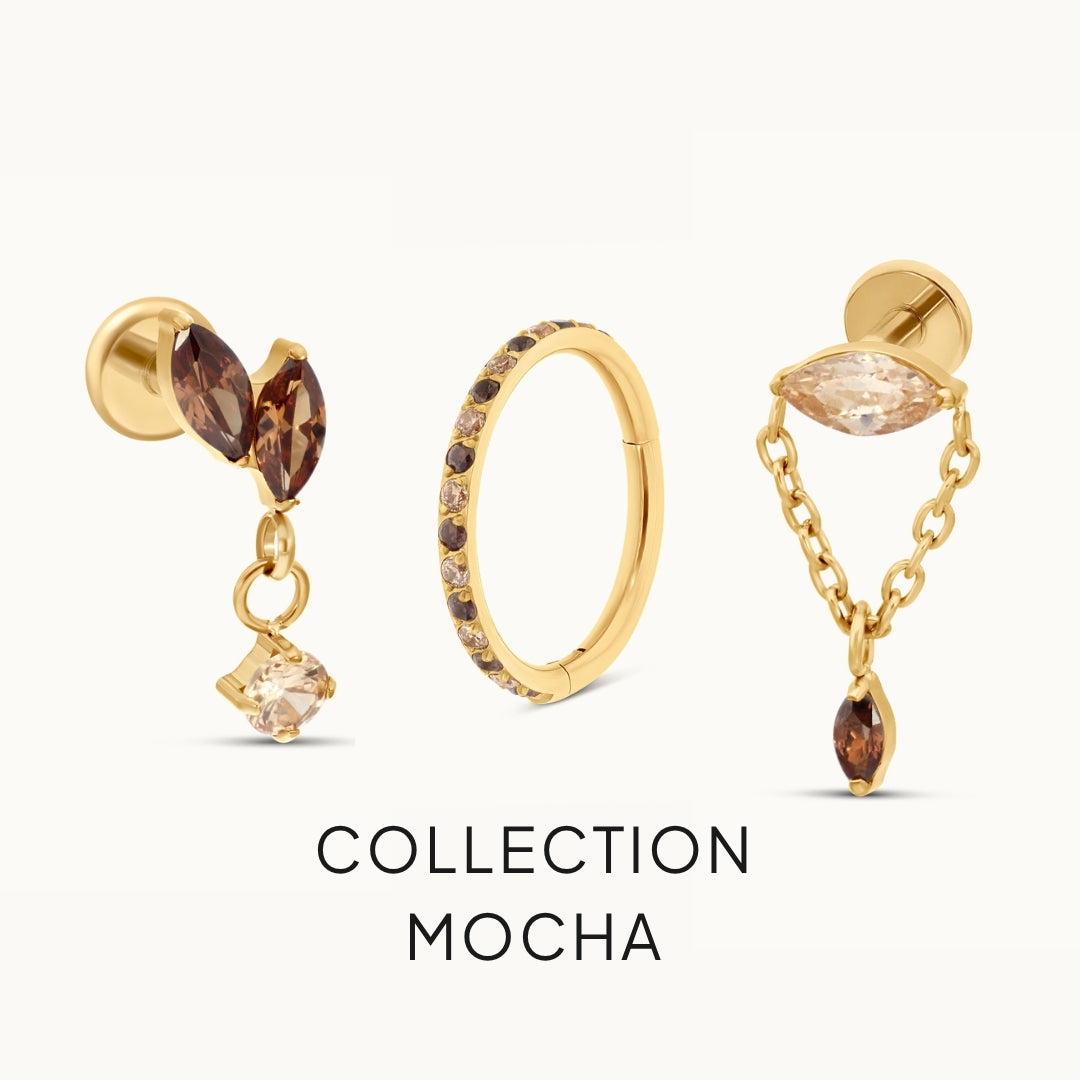
Long seen as a purely medical metal, titanium has become a stylish, refined material in its own right. Jewelry designers now shape it into countless forms: discreet labrets, colored hoops, minimalist bars, or pieces set with gemstones. It combines elegance and safety, with no compromise.
6. Titanium irritates the skin – False
It's actually the opposite! Titanium is hypoallergenic, and contains no irritating metals. That's why it's recommended for anyone who's already had skin reactions with other metals. It protects the skin and supports better healing.
7. Titanium isn't suited to a first piercing – False
Piercing professionals recommend it precisely for first fittings. Its lightness limits the risk of inflammation. It's the safest material to support the skin during the first weeks of healing.
8. Titanium oxidizes on contact with water – False
Titanium doesn't rust or oxidize, even in humid environments. It's perfectly suited to everyday wear, at the beach or the pool. It's an ideal metal for active people, or anyone who wants to keep their jewelry in permanently.
9. All titanium is the same quality – False
Not all titanium jewelry is equal quality. Only ASTM F-136 titanium guarantees a pure, risk-free composition. Some lower-grade alloys contain secondary metals that can cause irritation. At Obsidian Piercing, we only offer titanium piercing jewelry.
10. Titanium is only for medical piercings – False
While it's used in the medical field for its biocompatible properties, titanium is now everywhere in piercing jewelry collections. It lets you combine comfort, safety and style.
How do you recognize genuine titanium jewelry?
Look for the ASTM F-136 mention
This is the absolute guarantee of medical-grade titanium, the same grade used for surgical implants. This mention should appear clearly in the product description.
Avoid misleading labels
Labels like "surgical titanium" or "titanium steel" don't guarantee anything. They're often used to suggest quality without any real certification. If the composition isn't specified, it's best to steer clear.
Titanium isn't just a passing trend: it's a genuine ally for your piercings. By choosing ASTM F-136 titanium jewelry, you're choosing flawless quality and total comfort, whether for a first piercing or to add to your collection.
Discover our selection of titanium piercing jewelry in ASTM F-136 at Obsidian Piercing, designed to elevate every style with unique designs, guaranteed medical-grade quality and unmatched comfort.