



The Best Tips for a Helix Piercing
There you go! You've taken the plunge and want a helix piercing. If you're new to ear piercings, you'll generally want to start with the one considered least painful. Where you choose to get pierced really comes down to you. The lobe is widely seen as the least uncomfortable spot to pierce, since lobes have no cartilage. The helix comes next. For a cleaner look, the simplest approach is to start with the lobes and then move on to the helix. This spot is a classic to have on your ear! In this article, you'll find a few tips to wear it beautifully, plus, to finish, an amazing selection of Obsidian helix jewelry.
Choosing your type of helix piercing
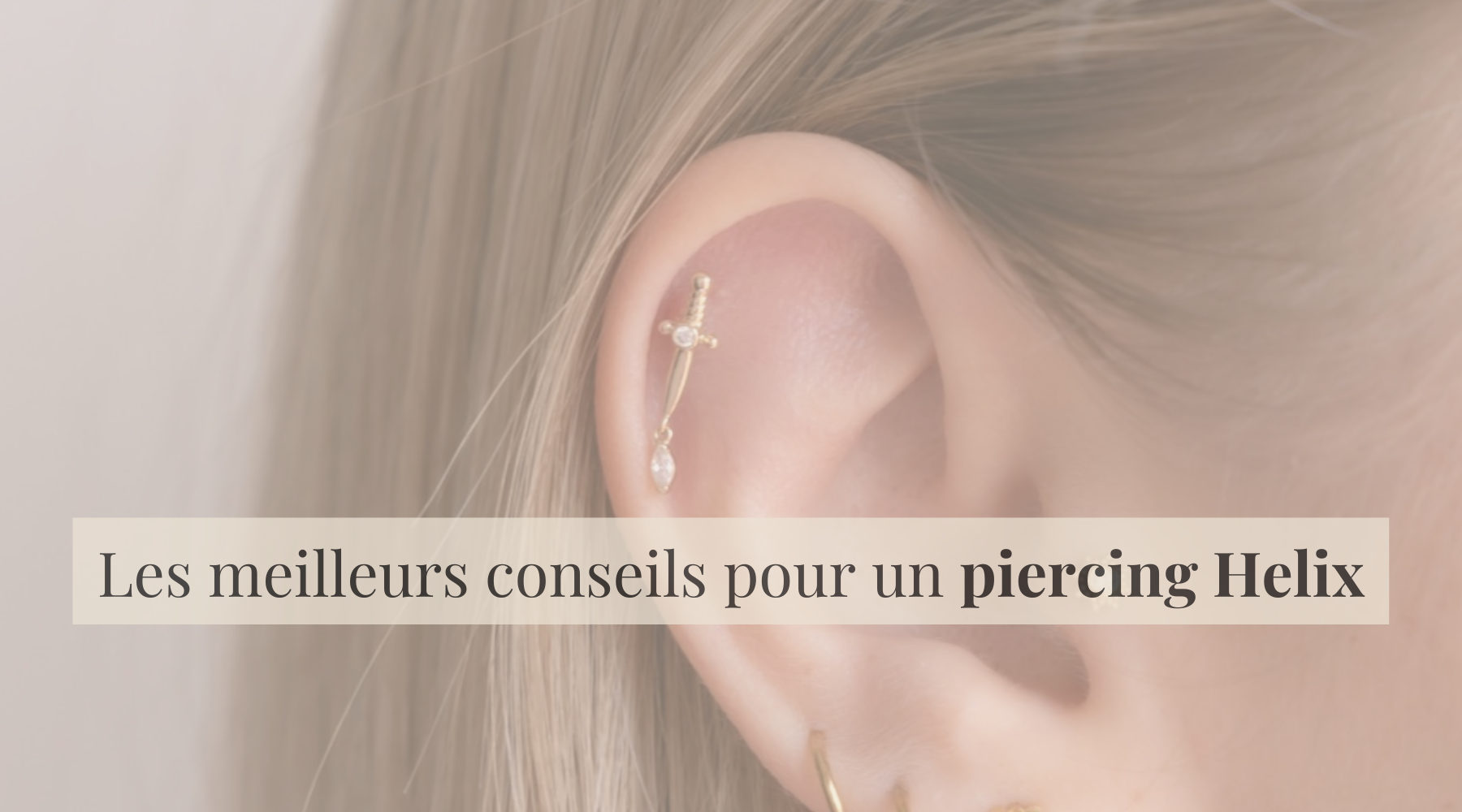
There are several variations on the helix. You can go for the classic piercing, which sits at the top of your ear, or for the anti-helix, which sits opposite it. In general, you can start by getting a classic helix piercing, then add a second, then a third, working your way down toward the lobe. We love cascade effects and stacking piercings of all kinds. Ears well stocked with piercings are the prettiest! Go ahead and stack them, they suit you :)

The helix piercing process
Every piercing should be done by trained piercing professionals. It's important that cartilage piercings are done by properly trained piercers. As a professional, your piercer should be able to explain the hygiene rules to follow. If you run into any issues or need to change one of your pieces of jewelry, they should be able to help. You should also make sure your piercer uses a sterile, single-use needle for your piercing, never a gun. Piercing guns generally don't "pierce" your ear the way a needle does, they force their way through by "crushing," which often causes micro-damage to your ear's cartilage that can lead to problems later on. On top of that, the gun isn't hygienic, since it's reused. Sterile equipment and a clean environment are essential.
Choosing your jewelry
We recommend two materials for your piercing. During and after your piercing, titanium and gold are far and away the most skin-friendly materials. We don't recommend stainless steel. Even though it's very popular, it contains nickel, a highly allergenic alloy that's best avoided. Plenty of people are allergic to nickel. Titanium and gold are both hypoallergenic materials. That means no risk of allergies if you choose quality jewelry for your skin. Titanium and gold contain no nickel and hold up remarkably well over time. As for gold, we recommend at least 14k. 9-carat gold isn't pure enough and often still contains nickel.
Labret or hoop? Most people love decorating their helix with a hoop. That said, for your first helix piercing, you'll first be fitted with labret-style jewelry (a bar). This supports faster, more reliable healing than a hoop. Plan on at least 1 to 2 months before switching to a hoop, to avoid irritation from it turning during the first phase of healing. Patience is everything when it comes to piercings.
Healing and aftercare for a helix piercing
Healing is often a fairly long process. If you're not careful with it, it can drag on for months, sometimes even years! You don't want that, right? Follow these tips for a smooth helix healing process. They also apply to your other ear or body piercings (tragus, septum, nipples, navel…)- Don't sleep on the ear with the fresh piercing: do your best not to sleep on your new piercing until it's fully healed. If that's just not realistic for you, consider investing in a travel pillow to avoid resting on it, or placing a clean cloth over your pillow each night to help keep bacteria away.
- Use physiological saline and sterile gauze pads: use these two essentials regularly as part of a good aftercare routine. They're the two products we recommend. You can also use a saline solution (salt water). Don't touch your piercing: even if it looks fully healed, don't play with your jewelry! Our hands are often full of bacteria that can reach our piercings.
- Have your first jewelry change done by your piercer: if you're unsure about changing your helix jewelry, we recommend visiting your piercer. They can guide you toward your next piece. Fitting a piercing yourself can be tricky, so save yourself the stress!
If you follow these tips closely and your helix still isn't healing after a while, visit your piercer. Don't let anything that seems off drag on too long, it could turn into something more complicated.
Check out our full helix piercing guide here.
Our Obsidian helix piercing selection
And there you have it! You're officially hooked on the helix piercing. We can't wait to see what you get next. We've put together a small selection of our best helix pieces. Choosing will be the hardest part, we'll admit.
Resha Jewelry: for a sophisticated look, the Resha piece is ideal for elevating a helix.
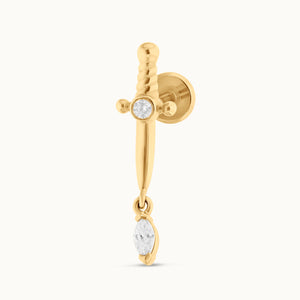
Daenerys Jewelry: the Daenerys sword is amazing for a bold, striking helix! We love the tiny jewel at the tip of the sword and its gold finish, built to keep up with your everyday life.
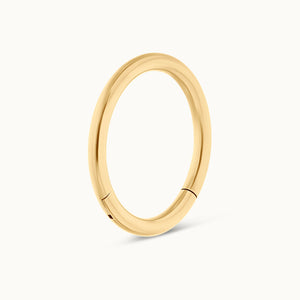
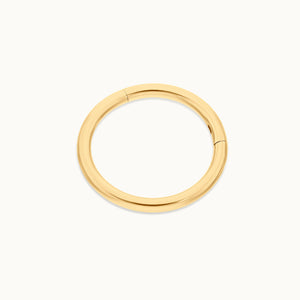
Classic hoops: if you have several helix piercings, a basic titanium or gold hoop is a great choice. This piercing is perfect for a cascade effect, and it's one of our favorites.
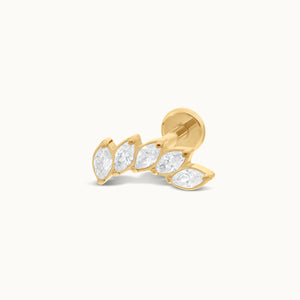
Sterope Piercing: the titanium Sterope piece follows the shape of your helix beautifully, set with cubic zirconia for extra sparkle!
If you're still unsure about your next ear composition or another body piercing, feel free to reach out. We're piercing professionals first and foremost, and we love talking with you and offering advice! You can also find composition ideas on our Instagram account: @obsidian_piercing or our TikTok @obsidianpiercing

