

Industrial Piercing: Tips and Aftercare
The industrial piercing shows up on plenty of ears these days. It's made up of two holes through the upper cartilage of the ear, connected by a single bar with a bead on each end. Once it's healed, you can also switch to two separate pieces of jewelry. If you're still on the fence about an industrial piercing, follow our tips throughout this article.
How does an industrial piercing work?
Before choosing an industrial piercing, visit your piercing studio and have your ear checked by a professional piercer. Everyone's ear shape is different. Unfortunately, not everyone can get an industrial, so if your anatomy isn't suited for it, don't force it. In general, your ear needs a fold along the cartilage at the outer rim. If your ear doesn't fold enough, it becomes difficult for the piercer to place an industrial piercing properly. This isn't about looks, it's about feasibility. If you go ahead with an industrial piercing without the right anatomy for it, you're likely to run into complications.
Once you have all the information and your ear is a good fit for this piercing, you're ready to take the plunge. Your piercer will use a sterile needle and appropriate equipment for spotless hygiene. Once your industrial piercing is done, your piercer will give you an aftercare sheet for optimal healing.
Does an industrial piercing hurt?
An industrial piercing is fairly painful, since it involves two piercings at once. The angle also needs to be placed correctly, which is why choosing a reputable, experienced piercer matters. Even though the pain only lasts a short while, you'll need to take good care of it with a spotless aftercare routine .How much does an industrial piercing cost?
An industrial piercing typically costs between €50 and €80 in most studios. Be wary of piercing studios offering prices far below the competition. Prioritize the quality of service over the price, since this is about your health and a mark you're choosing to give yourself. We've heard many accounts of piercing infections linked to piercings done at jewelry shops, for example. Choose a qualified piercer for your industrial piercing.
Healing and aftercare for your industrial piercing
The industrial is one of the slower-healing piercings. That makes follow-up especially important, to make sure it heals properly and to avoid infection. We recommend using physiological saline whenever you clean your piercing. You can also use sterile gauze pads so no cotton fibers get caught in your industrial bar.
Here's a short list of "don'ts" for right after you get your industrial piercing:
- We recommend against using Betadine or 90-proof rubbing alcohol. Both are hard on your skin and/or your jewelry
- Disinfect your hands before touching your ears
- Don't use cotton swabs or cotton pads. They can get caught in your industrial piercing
- Don't sleep on that ear
- Don't play with your piercing, you risk losing one of the beads or introducing bacteria to your barbell
- Avoid choosing a barbell that's too short for your ear's shape
If your industrial piercing does get infected, have it checked right away rather than waiting for the infection to get worse. Don't hesitate to see your doctor so they can assess the infection in your ear.
When can you change an industrial piercing?
Good healing generally takes several months. We recommend waiting at least 6 months before touching or changing your industrial piercing. Keep your bar in long enough to avoid any unpleasant surprises.
- For a barbell, we recommend 1.6mm thickness. As for length, you can choose a bar between 30 and 38mm depending on your ear's shape and how far along healing is.
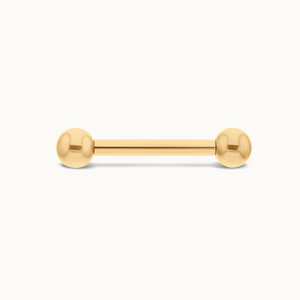
- All our barbells come sold with their beads, making it easier to pick your jewelry. Keep in mind that bar size matters, both for healing and afterward. We carry a range of bars in our online shop.
Once healing is complete, you'll be able to swap your industrial piercing for a different piece. At Obsidian Piercing, our online shop offers beautiful jewelry that's also kind to your skin.
Whether you love rhinestones, turquoise stones, or pieces with intricate detail, we've got you covered! You'll find great value throughout. The piercing world keeps evolving, and silver-toned and gold jewelry are more popular than ever right now. Delicate pieces are trending too. To give you a small taste, here's our industrial piercing selection:
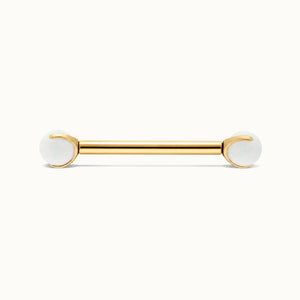
You can also wear two different pieces of jewelry for your industrial. Without the bar connecting them, the look becomes helix / anti-helix. That's exactly why the industrial piercing is so appealing: 2 in 1 :)
What's the best material for an industrial piercing?
As for material, we don't recommend surgical steel, and instead recommend quality materials:
- Titanium (available in silver-toned or gold) or gold are both great choices for jewelry.
- These materials are kind to your skin and hold up well over time
- Titanium and gold are hypoallergenic
Why don't we recommend surgical steel?
Surgical steel contains nickel, which can lead to infection.
Changing your piercing should be a considered decision. Patience is the key to good healing for your ear piercing. As mentioned earlier, industrial piercings need extra-attentive aftercare.
We hope this gave you the push to take the plunge on an industrial piercing. We're here to chat about your next piercing idea, whether that's a helix or a tragus… And if you're unsure about sizing for a specific type of jewelry, a size guide is available on our site. Thanks for reading, and see you soon!