

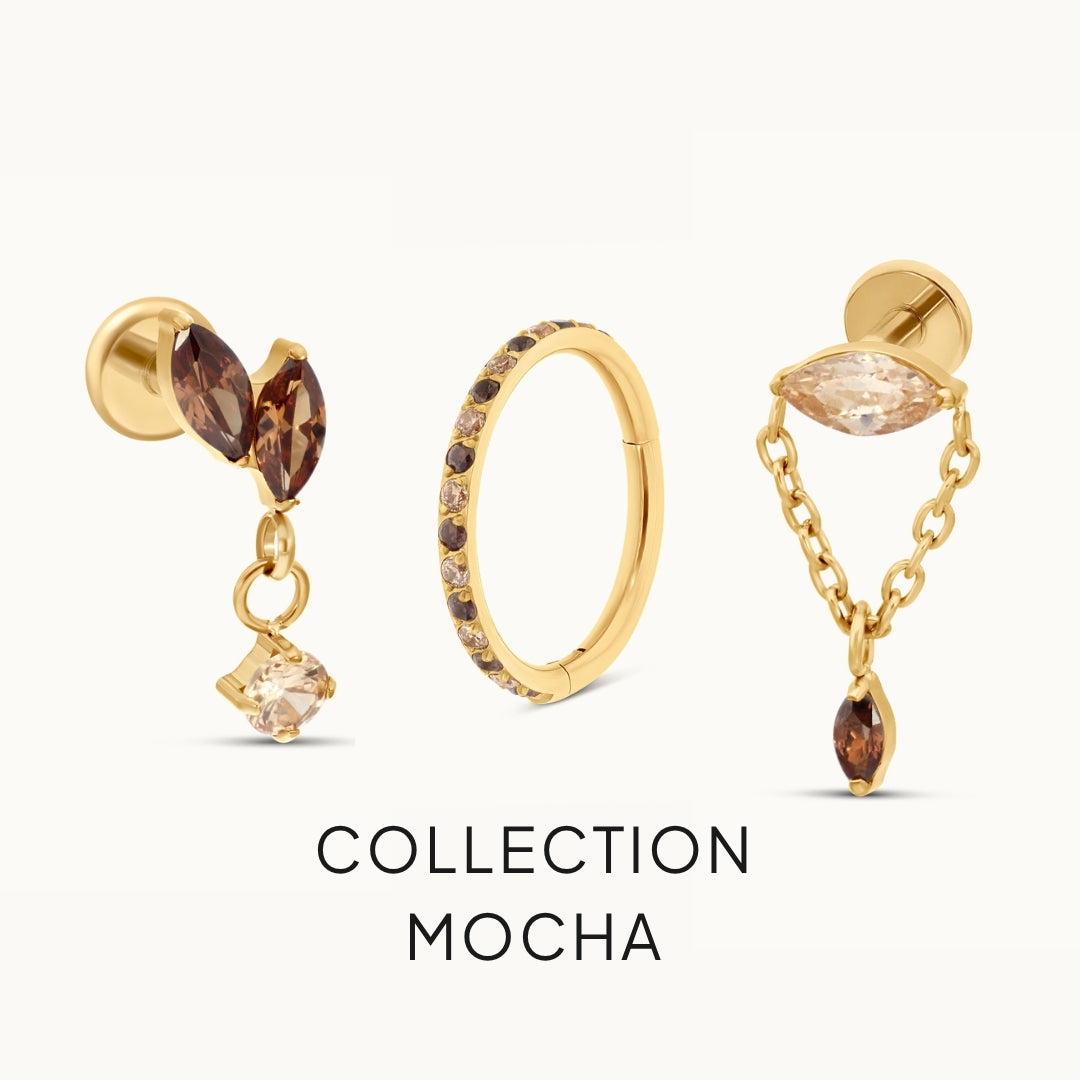


Are There Risks to Getting Multiple Piercings at Once?
Getting multiple piercings is a real trend right now. Multiple ear, body and facial piercings are a great way to express your personality, but this approach does come with certain risks. This article explores the potential risks of getting several piercings at once, and gives you tips for doing it safely.
Getting Multiple Piercings: Understanding the Risks
Risks of Irritation and Inflammation
Getting your skin pierced naturally carries some risk of inflammation or irritation, and this risk can increase when several piercings are done at once.
Depending on the area of the body, and if your piercer agrees, it's generally possible to get up to three piercings at once. This limit gives each piercing the best chance to heal properly. That said, it's important to follow a few guidelines for the best possible multiple-piercing experience.
Here are our basic tips:
1) Choose a qualified piercer: Make sure your piercer strictly follows hygiene standards and uses sterilised equipment, and choose one who offers quality piercing jewelry. Not sure how to choose your piercer? Check out our guide to finding a good piercing professional.
2) Aftercare: Whether you get one piercing or several, following proper aftercare matters. Start by washing your hands thoroughly (hands, palms, under nails). We then recommend using sterile gauze pads and saline solution to clean your piercings (no cotton wool or cotton swabs). Don't remove crusting too early: it protects your piercings and forms a barrier against bacteria. Removing it too soon can cause irritation and inflammation, and slow down healing.
3) Watch for signs of infection: stay alert to symptoms like redness, swelling, pain or unusual discharge, and consult a healthcare professional at the slightest doubt.
By following these precautions, you can significantly reduce the risk of infection and enjoy your new piercings safely.
The Benefits of Multiple Piercings
Aesthetics and Personal Expression
Getting multiple piercings has real benefits too. Beyond being on-trend, it's a way to express your personality, whether you love discretion or boldness. Take ear piercings, for example: you can build curations that match your everyday look, or adapt your ear jewelry for special events.
Materials to Choose
Using high-quality materials is crucial for both the safety and durability of your piercings. Our range includes:
- ASTM F-136 titanium: known for its excellent biocompatibility and resistance to corrosion, this material is ideal for piercings, especially for people with sensitive skin. This grade of titanium is hypoallergenic, so it can be used as your first piece of jewelry, giving you access to a wider range of designs.
- 14k and 18k gold: gold isn't just beautiful, it's also durable and less likely to trigger allergic reactions, making it a perfect choice for piercings.
- 316L surgical steel: on our site, you'll find earrings in 316L surgical steel, designed for healed lobes. Surgical steel isn't suitable for cartilage piercings, but this steel grade is ideal for people with sensitive lobes, or anyone who's had a bad experience with other earring materials. It's hypoallergenic, resistant to corrosion and holds up to everyday wear. In the end, there's not much difference between ASTM F-136 titanium and 316L surgical steel, other than the fact these earrings are only for healed lobes.
These materials aren't chosen for their looks alone: they also offer real safety and comfort benefits, keeping your piercings beautiful and healthy over time.
Practical Benefits of Multiple Piercings
Getting several piercings at once also has practical benefits, including a shorter overall healing timeline and the chance to enjoy your full curation sooner. This approach also means fewer visits to your piercer, which can help reduce the anxiety and stress that come with repeated piercing sessions.
Frequently Asked Questions
How Long Should You Wait Between Sessions?
It's generally best to wait until your first round of piercings is fully healed before adding new ones. This can range from a few months to a year, depending on the area of the body and how quickly each person heals.
Is It More Painful to Get Several Piercings in One Session?
Pain levels vary depending on individual tolerance and where the piercings are located. That said, getting several piercings in one session can be an advantage, since you only have to deal with the discomfort once rather than across multiple visits. As mentioned earlier, piercers don't recommend more than three piercings at a time.
How Do You Choose Placements for Multiple Piercings?
It's important to consult a professional piercer, who can advise on the best placements based on the shape and structure of the area, as well as your aesthetic goals. Choose your piercing professional carefully, and check their reviews and past work.
Can You Mix Different Types of Metal?
It's best to choose jewelry in the same metal. Our titanium and gold jewelry is specially designed to be compatible with one another, minimising the risk of irritation.
What Specific Precautions Should You Take After Multiple Piercings?
Beyond standard cleaning, it's crucial to monitor each piercing site for signs of inflammation, irritation or infection. Avoid touching your piercings frequently with unwashed hands, or removing crusting too early. Follow your piercer's aftercare instructions closely.
Are There Activities to Avoid After Multiple Piercings?
We recommend avoiding intense physical activity, swimming in pools or the sea, saunas and steam rooms. It's important to avoid direct contact with chemicals or other potential irritants during the first few weeks of healing, to prevent complications and support optimal healing.
Getting multiple piercings is a rewarding form of personal expression. By choosing quality materials like ASTM F-136 titanium and 14k/18k gold, and following professional advice, you maximise both the safety and beauty of your piercings. Always keep healing in mind, and plan your sessions carefully for a safe, satisfying experience.

