

Helix Piercing: Why You Shouldn't Change Your Jewellery Too Soon
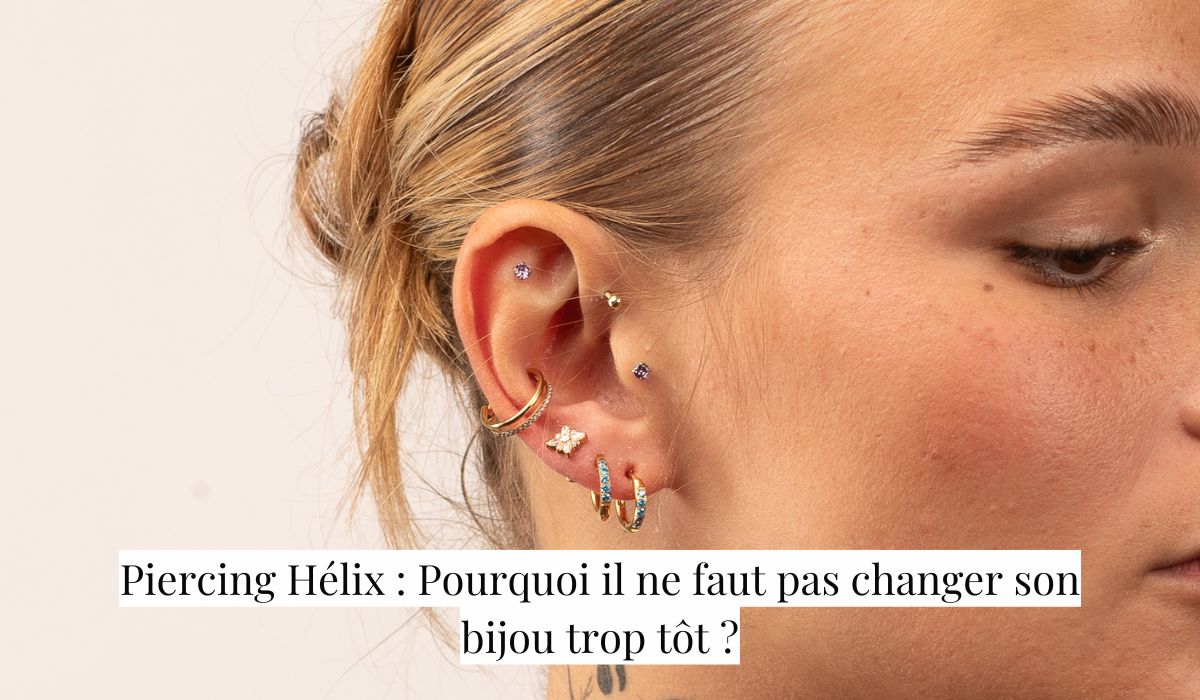
The helix piercing is one of the most popular piercings, loved for a look that's both discreet and on-trend. Sitting on the ear cartilage, it needs longer to heal than a lobe piercing. Even so, many people make the mistake of wanting to change their jewellery too soon, which can lead to complications like infection or prolonged irritation.
In this article, we'll look at why it's essential to be patient before changing your jewellery, which materials to choose for good healing, and how to tell if your piercing is ready for new jewellery.
What Is a Helix Piercing?
The helix piercing sits on the upper ear cartilage and can be done in several styles:
- Single helix: a single piercing along the curve of the cartilage.
- Double or triple helix: several piercings aligned in the same area.
- Forward helix (anti-helix): sits on the inner part of the cartilage.
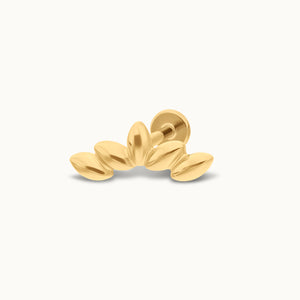
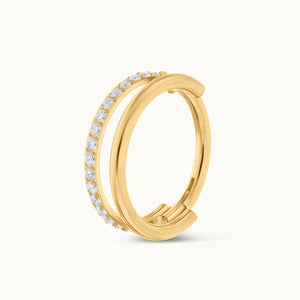
This piercing offers a huge range of styles, and can be finished with a hoop or a labret-style piece, depending on your preferences and anatomy.
The first-fitting jewellery needs to be a labret-style piece, as hoops tend to turn, causing irritation and inflammation that can slow down healing.
Which Materials Should You Choose for a Helix Piercing?
Choosing the right first-fitting jewellery is crucial for good healing. An unsuitable material can cause allergic reactions, irritation or rejection.
Here are the recommended materials:
ASTM F-136 Titanium (the best choice for your helix):
- 100% biocompatible, it contains no nickel and doesn't cause allergies.
- The same material used in surgery, prized for its medical-grade purity, making it ideal for healing.
- Lightweight, corrosion-resistant, and doesn't tarnish.
14K or 18K Gold (Not Plated):
- Hypoallergenic if the gold is good quality (avoid low-grade alloys).
- Durable and highly resistant
- Avoid 9K gold or plated jewellery for your helix piercing, as these often contain nickel.
Materials to Avoid for Your Helix Piercing:
- 304-type surgical steel (contains nickel and can cause allergies).
- Silver (oxidises and can cause infection).
- Plastic or bioflex (not smooth enough to support good healing).
Why Shouldn't You Change Your Piercing Jewellery Too Soon?
Cartilage takes longer to heal than the lobe. Unlike a lobe piercing, which heals in 6 to 8 weeks, a helix piercing can take 6 to 9 months or more to fully heal.
Changing your helix piercing jewellery too soon can lead to:
- Reopening a channel that's still fragile.
- Persistent swelling and redness.
- A higher risk of infection from handling and introducing non-sterile jewellery.
Other risks of changing jewellery too early. Here are the main complications that can arise if you change your jewellery too soon:
- Infection: an unhealed channel is more vulnerable to bacteria.
- Keloids and irritation bumps: an inflammatory reaction caused by trauma to the cartilage.
- The hole closing up: if the jewellery is removed too soon, the hole can close quickly.
- Prolonged pain and inflammation: changing jewellery while the piercing is still inflamed prolongs healing.
How Long Should You Wait Before Changing Your Helix Piercing?
The Stages of Helix Piercing Healing
The healing process moves through several stages:
- Inflammatory stage (0 to 2 months): swelling, redness and sensitivity.
- Stabilising stage (3 to 6 months): swelling eases, and the channel starts to strengthen.
- Full healing stage (6 to 9 months or more): the channel is fully formed and stable.
How Do You Know If Your Piercing Is Ready for New Jewellery?
Before changing your jewellery, check for the following signs:
- No redness or pain.
- No lymph or pus discharge.
- The jewellery turns easily, without discomfort or catching.
Don't hesitate to book a check-up with your piercer to make sure your piercing has fully healed.
What Jewellery Should You Choose After Healing?
Choose Titanium or 14K/18K Gold Jewellery
Even after healing, stick to quality materials:
- ASTM F-136 titanium: always a safe bet, lightweight and durable.
- Solid 14K/18K gold: for an elegant finish and excellent skin tolerance.
Hoop or Labret: Which Is the Better Option?
The labret, with its straight post, is strongly recommended for first-fitting jewellery, as it limits movement and helps reduce the risk of irritation and inflammation. It's perfectly fine to keep wearing labret-style jewellery after healing too. At Obsidian Piercing, you'll find on-trend jewellery to suit every style!
A hoop, on the other hand, should only be worn once the helix piercing is fully healed, as it puts extra pressure on the cartilage and can slow healing if worn too soon.
Changing your jewellery too soon can delay healing and cause complications. Take the time to let your piercing heal, and choose jewellery that's right for it! To discover our collection of ASTM F-136 titanium and 14K/18K gold jewellery, visit our collection page and find the perfect piece for your helix piercing!