

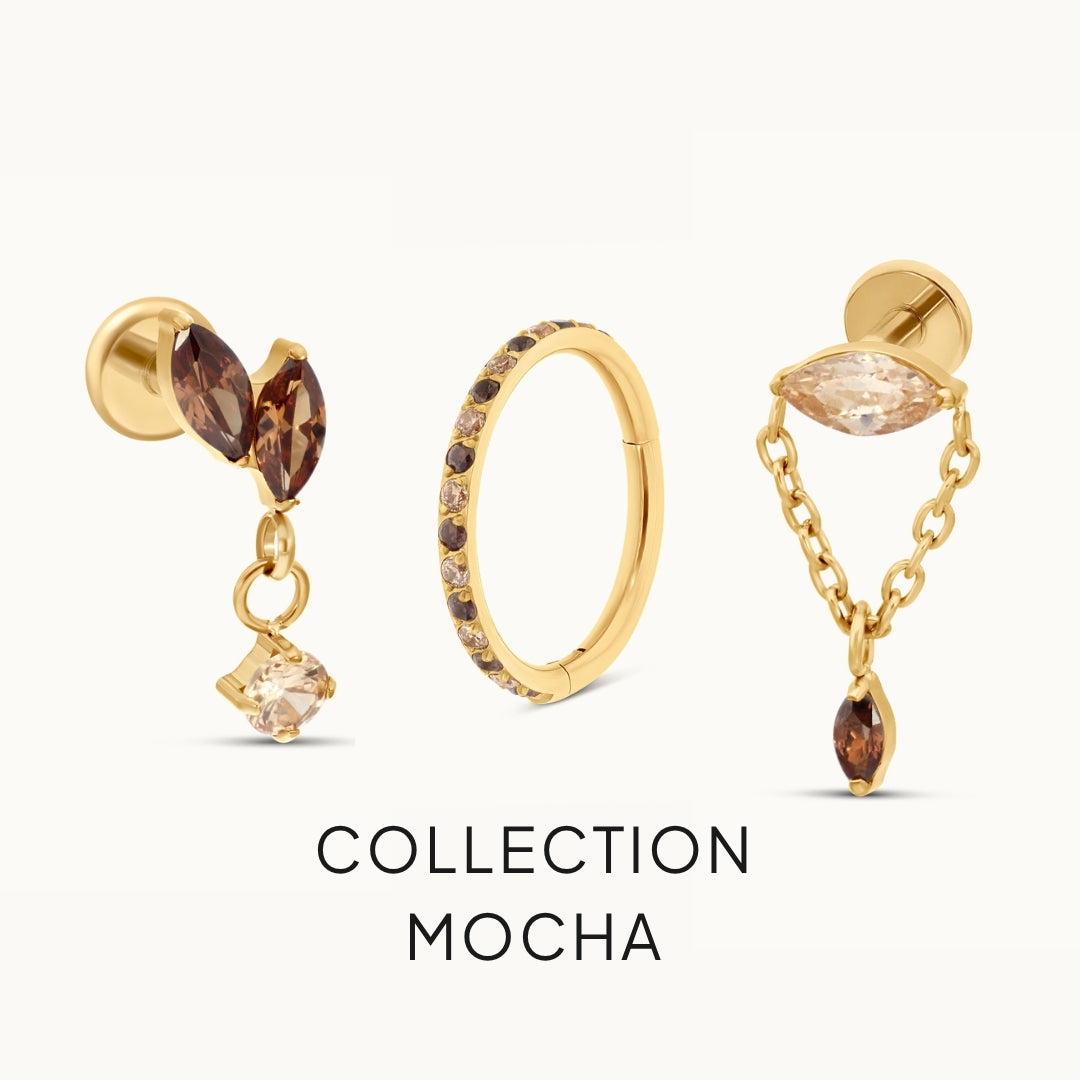


Mistakes to Avoid With Titanium Piercing Jewelry
ASTM F-136 titanium is recognized as one of the safest, most recommended materials for piercing jewelry. Hypoallergenic, lightweight and corrosion-resistant, it's often used for first fittings. Yet even with quality jewelry, certain mistakes can compromise your piercing's healing or the jewelry's durability. In this article, let's go through the most common mistakes to avoid so you can enjoy everything titanium has to offer.
Why choose ASTM F-136 titanium piercing jewelry?
A safe, medical-grade material
ASTM F-136 titanium is a material used in surgery. It's nickel-free, which makes it ideal for sensitive skin. Resistant to oxidation, it doesn't change color, doesn't wear from contact with water, and offers excellent biocompatibility.
An ideal choice for a first fitting
Used by the best piercing studios, ASTM F-136 titanium is recommended for the first months of healing, since it minimizes the risk of inflammation, allergies and rejection.
Mistakes to avoid with titanium piercing jewelry
Mistake 1: Cleaning your piercing with a harsh product
Many people use alcohol, hydrogen peroxide or antiseptic to clean their piercing. These products are too harsh and can irritate the skin and slow healing.
- Do this instead: use a gentle saline solution to clean it.
- Titanium jewelry doesn't need to be "disinfected" every day, especially if it's new and never removed.
Mistake 2: Changing your jewelry too early
Even if your titanium jewelry is perfectly safe, changing it too early (before healing is complete) can create internal micro-injuries and delay healing, or even cause an infection.
Keep your titanium starter jewelry in place until the end of the healing period recommended by your piercer (often a few months, sometimes longer depending on the area). Once the area is fully healed, you can switch to a hoop or a different shape.
Mistake 3: Buying low-quality piercing jewelry
Some unreliable online shops or marketplaces advertise "titanium" jewelry that doesn't meet the standards. It may contain nickel or lack ASTM F-136 certification.
Check that the site offers certified ASTM F-136 titanium piercing jewelry, especially for a first fitting.
Be wary of prices that seem too low, vague descriptions, or no mention of the certification standard.
Mistake 4: Leaving your jewelry out too long
Even with quality jewelry, leaving your piercing empty for too long can cause it to close up quickly, especially if it's still recent.
If something feels off, see a piercer rather than removing the jewelry yourself. And if you do need to take it out (for a scan, for example), put it back in as soon as possible.
Mistake 5: Sleeping on your piercing
Even if you're wearing ASTM F-136 titanium piercing jewelry, sleeping on a freshly pierced area is still a bad idea. Repeated pressure against the pillow can cause:
-
persistent pain,
-
prolonged irritation,
-
jewelry migration,
-
or even flattened cartilage (especially for piercings like the helix or conch).
For the first few weeks (or months, depending on the area), it's best to sleep on the opposite side from your piercing. To avoid any pressure, consider using a donut-shaped travel pillow or a piercing pillow. These accessories let your ear rest suspended, without direct contact.
Choosing ASTM F-136 titanium jewelry is an informed choice for your health and for your piercing's success. But even the best material still calls for the right habits and careful aftercare.

