


Helix Piercing: How to Choose the Right Jewellery and Avoid Common Mistakes
The helix piercing is one of the most popular piercings around. It's well loved for its versatility and the original touch it brings to an ear composition. Whether you're after a subtle look or a bold set of piercings, the helix opens up endless combinations.
As with any piercing, it's essential to choose the right jewellery and know the best practices for aftercare. In this article, we'll show you how to choose the best jewellery and avoid common mistakes.
Why Is the Helix Piercing So Popular?
The helix piercing has become one of the most popular ear piercings, largely thanks to its placement on the cartilage. It's especially loved by young adults, for several reasons:
- You can wear either a labret-style stud or a hoop.*Note that your initial piercing jewellery will be a labret-style stud. You'll need to wait until healing is complete before wearing a hoop.*
- You can also get several helix piercings.
- The helix piercing pairs easily with other ear piercings like the lobe or tragus, letting you create striking ear compositions.
How Do You Choose the Right Helix Piercing Jewellery?
Choose ASTM F-136 Titanium for Your Helix Piercing
One of the most common mistakes is choosing piercing jewellery made from an unsuitable material, such as 304 steel. This type of metal can cause allergic reactions or infections, especially for sensitive skin.
To avoid this, choose hypoallergenic materials like ASTM F-136 titanium or 14k or 18k gold, which are not only safe but also ideal for helping your ear piercing heal quickly.
ASTM F-136 titanium jewellery is especially recommended for helix piercings, as it's hypoallergenic and safe for sensitive skin. ASTM F-136 titanium is durable and corrosion-resistant, making it an ideal choice for helix piercing jewellery.
Choose Jewellery to Suit the Shape of Your Ear
Every ear has a unique shape, and it's important to choose helix piercing jewellery that fits your anatomy well.
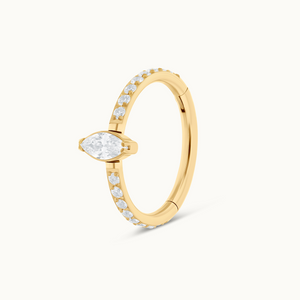
Ill-fitting helix piercing jewellery can cause pain or irritation. For a subtle look, you can go for a labret stud. If you prefer a bolder style, we'd recommend a hoop set with zirconia. At Obsidian Piercing, we offer options for every taste and style. Don't hesitate to ask your trusted piercer which jewellery size will best suit the shape of your ear.
How Do You Care for Your Helix Piercing for Optimal Healing?
Looking after your ear piercing, especially when it's new, is essential. Regular cleaning and good daily habits help prevent irritation, inflammation and infection.
Clean Your Piercing Jewellery Regularly
To support quick healing and avoid infection, it's important to clean your helix piercing daily. To do this: use saline solution and a sterile compress. You can clean it twice a day for three weeks. Make sure not to move or turn the jewellery, as this could irritate the area and prolong healing. Be gentle and avoid handling your ear piercing too much.
Avoid Touching or Changing Your Jewellery Too Soon
A common mistake that can slow down healing is touching your helix piercing often with unwashed hands, or changing the jewellery too soon.
It's essential to leave the jewellery in place for the whole healing period, which can range from several weeks to a few months. Changing jewellery too soon, or touching the piercing with unwashed hands, increases the risk of infection and can lead to complications.
Avoid Removing Crust Too Soon
The crust that forms around your ear piercing during healing is normal and plays a protective role. It can be tempting to remove it, but doing so can slow down healing and cause irritation or infection.
Removing crust too soon can also reopen the wound, exposing your piercing to bacteria. It's best to let it fall away naturally or clean it gently with saline solution.
Avoid Sleeping on Your Helix Piercing
Sleeping directly on a freshly done ear piercing can cause irritation, prolong healing time, and even lead to complications such as jewellery displacement or infection. The pressure placed on the ear while sleeping can cause swelling and pain. We recommend sleeping on the other side, or using a special donut-shaped pillow to relieve pressure on the pierced area.
The helix piercing is a wonderful way to add a personal touch to your style while staying elegant and on-trend. Discover our exclusive selection of ASTM F-136 titanium and gold piercing jewellery, designed to complement your helix piercing while ensuring maximum safety.