

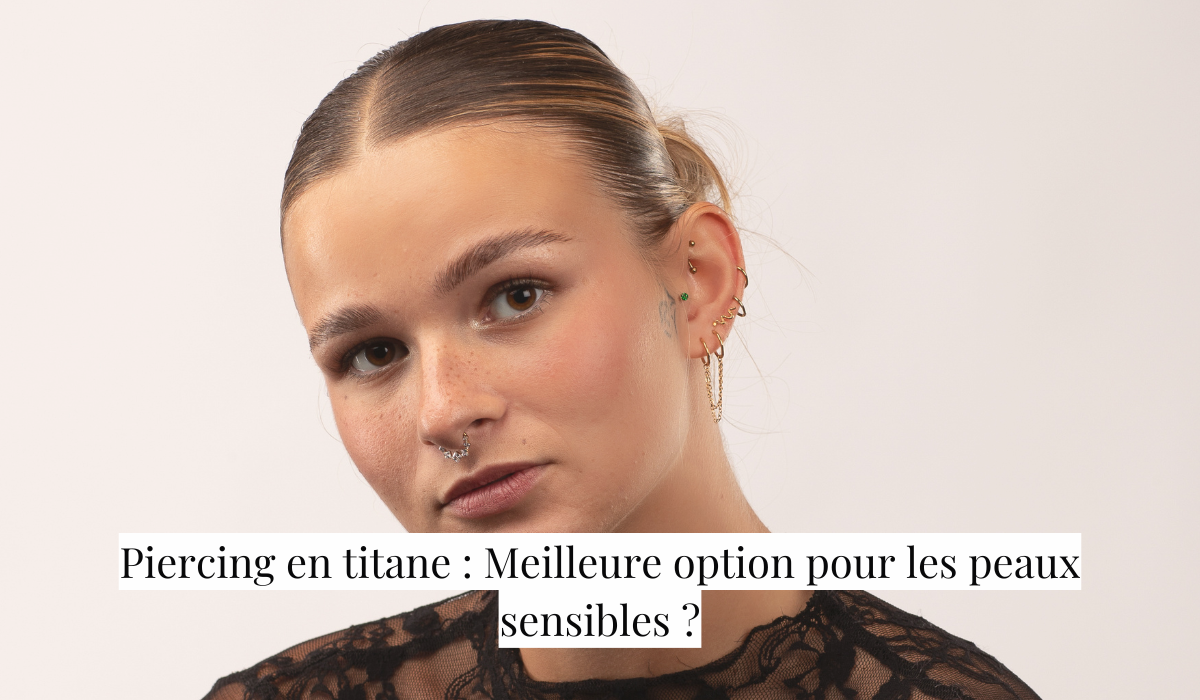
Titanium Piercings: The Best Option for Sensitive Skin?
Choosing the right material for your piercing jewellery is a crucial step. The right material gives you both safety and comfort.
Safety and comfort matter most if you have sensitive skin. Titanium is well known in the piercing world, as it's ideal for avoiding irritation and allergic reactions.
Its light weight and durability also make it a practical, good-looking choice, whether for a first piercing or to replace existing jewellery. In this article, we'll explore why titanium, particularly ASTM F-136 certified titanium, is the best choice to protect your skin while keeping your style on point.
Why Is Titanium Recommended for Sensitive Skin?
The Hypoallergenic Properties of ASTM F-136 Titanium
ASTM F-136 titanium is an ideal material for anyone with sensitive skin, as it contains no nickel, a metal that's often responsible for allergic reactions. Its hypoallergenic nature ensures optimal comfort, even for the most reactive skin.
Titanium's Compatibility With Sensitive Skin
ASTM F-136 titanium is perfectly suited to delicate skin thanks to its properties:
- No nickel: reduces the risk of allergic reactions.
- Non-irritating: its smooth surface and low chemical reactivity don't cause irritation, even in contact with sweat or cosmetics.
- Optimal comfort and healing: titanium supports better healing, helping minimise the risk of irritation.
What Are the Other Benefits of Titanium Piercings?
Durability and Resistance
Titanium is extremely resistant to corrosion, meaning it doesn't rust or degrade, even in humid conditions. This makes it a long-lasting material, ideal for jewellery that's constantly in contact with skin and exposed to the elements.
Lightweight and Comfortable
ASTM F-136 titanium is not only durable, it's also very light, offering superior comfort. This lightness is especially valued for piercings in sensitive areas like cartilage, where comfort matters most.
ASTM F-136 Titanium: A Guarantee of Safety for Piercings
ASTM F-136 titanium is a medical-grade material. Biocompatible and tested for prolonged contact with the body, it reduces the risk of rejection and infection. Choosing a titanium piercing means choosing a high-quality material you can trust.
Comparing Materials: Why Avoid Certain Metals?
Surgical Steel vs Titanium: Allergy Risks
304 surgical steel is often used for piercings, but despite its reputation, it can carry allergy risks for some people!
Surgical steel contains nickel, a metal well known for causing skin allergies in many people. Even in small amounts, nickel can trigger allergic reactions, especially when the jewellery is worn continuously.
These reactions show up as redness, itching and inflammation around the piercing, making healing more difficult. Only 316L surgical steel is recommended for fully healed lobes (earrings).
Titanium, on the other hand, is completely nickel-free, making it a much safer choice for anyone with sensitive or allergy-prone skin. Choosing titanium helps minimise the risk of an adverse reaction and supports better healing.
Gold Plating and Silver: Possible Irritation and Drawbacks
Gold-plated and silver jewellery is often popular for its looks, but it isn't always ideal for piercings, particularly for sensitive skin.
Gold plating, for example, is a thin layer of gold over another metal, often brass or copper, which can oxidise or wear away easily. Once the gold layer wears off, the metal underneath is exposed, increasing the risk of irritation or an allergic reaction.
As for silver, while it's less allergenic than some other metals, it can oxidise on contact with air and moisture, creating a rough surface that can irritate the skin and slow healing. These issues don't arise with titanium, a pure, stable and completely biocompatible metal, ensuring a safe and comfortable piercing experience.
How Do You Know If Your Skin Is Sensitive to Piercing Jewellery?
Signs of an Allergic Reaction to Metal
If you have sensitive skin, it's important to know how to spot the signs of an allergic reaction to piercing jewellery. The most common symptoms include:
- Redness
- Itching
- A burning sensation around the piercing
- Swelling
- Skin rashes
- Small blisters or crusting
- Dry, flaking skin
These reactions usually happen when skin comes into contact with allergenic metals, such as nickel, found in many pieces of piercing jewellery. If these symptoms persist or get worse, you're likely allergic to the metal in your jewellery, and switching to a hypoallergenic material like ASTM F-136 titanium is the answer.
Piercings and Allergies: What to Do If You React
If you notice signs of irritation or infection on your piercing, it's important to act quickly to stop things getting worse.
Here's what to do:
- Clean your piercing with saline solution and a sterile compress twice a day for two weeks
- Don't sleep on your piercing
- Don't remove any crust that forms with the irritation or infection
- If the reaction persists, see your trusted piercer.
How Do You Care for a Titanium Piercing to Avoid Infection?
The Right Way to Clean a Titanium Piercing
To support healthy healing of your titanium piercing and avoid infection, it's important to follow a thorough aftercare routine.
Here's what to do:
- Wash your hands: always start by washing your hands with water and antibacterial soap before touching your piercing.
- Clean the piercing with saline solution: use sterile saline solution to gently clean the area twice a day for two weeks. Apply the saline solution with a sterile compress. Avoid rubbing the area too hard, as this can irritate the skin.
- Avoid irritating products: don't use alcohol-based or disinfectant products. These can irritate the piercing and delay healing.
- Rinse with clean water: after applying the saline solution, gently rinse with clean water to remove any salt residue.
- Dry the area: use a clean paper towel to dry the area. Avoid fabric towels, which can harbour bacteria.
By using these products and following a suitable aftercare routine, you'll support your piercing's healing while minimising the risk of infection. Don't forget to browse our collection on our site for the best possible piercing experience.