

Titanium Piercing Jewellery: What Thickness and Length Should You Choose for Your Piercing?
When choosing piercing jewellery, size is an essential factor you can't afford to overlook. The wrong thickness or an unsuitable length can lead to complications, such as irritation, prolonged healing, or even the jewellery being rejected. That's why it's crucial to understand these dimensions before you buy.
ASTM F-136 titanium is the ideal material for piercing jewellery, thanks in particular to its biocompatibility and nickel-free composition, which significantly reduces the risk of allergy and inflammation. But how do you choose the right thickness and length for your type of piercing?
In this article, we'll walk you through these essential factors and help you choose the perfect titanium jewellery for your piercing.
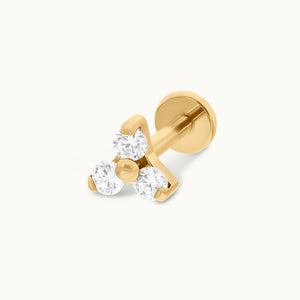
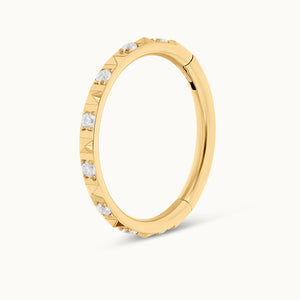
1. Understanding the Dimensions of Titanium Piercing Jewellery
What Is the Thickness of Titanium Piercing Jewellery?
The thickness of piercing jewellery is measured in millimetres (mm).
Here are the different sizes for titanium piercing jewellery:
- 0.8 mm: used for nostrils and some lobes.
- 1 mm: sometimes used for nose piercings and some lobes.
- 1.2 mm: the standard size for most cartilage piercings (helix, tragus, conch, rook, etc.).
- 1.6 mm: often used for navel and tongue piercings.
Choosing the right thickness matters. Jewellery that's too thin can cause the piercing to migrate, while jewellery that's too thick can cause irritation or make insertion harder.
Why Does the Length of the Jewellery Matter?
The length of titanium piercing jewellery is the distance between the two ends of a straight piece (or the internal diameter for hoops).
It plays a key role in comfort and healing. During healing, it's best to choose jewellery that's slightly longer, to avoid any compression from initial swelling. Once healing is complete, switching to a shorter length can help avoid catching and irritation.
2. Size Chart by Piercing Type

3. How Do You Choose the Right Size for Your Titanium Piercing Jewellery?
A Fresh Titanium Piercing: What Size Should You Choose?
When a titanium piercing is freshly done, the area can be prone to temporary swelling. That's why it's best to choose jewellery slightly longer than the final size, to avoid excess pressure on the skin. Jewellery that's too short risks embedding into the skin, causing pain and complications during healing.
When Should You Switch to a Shorter Piece?
The right time to shorten your jewellery depends on the type of piercing and how quickly it heals.
Generally speaking:
- Cartilage piercings (helix, tragus, conch, rook, etc.): 4 to 6 months before switching to a shorter piece.
- Skin piercings (lobe, nostril, labret, medusa, etc.): 2 to 3 months is often enough.
- More complex piercings (navel, nipple, industrial, etc.): wait 6 to 9 months or more before changing the size.
Signs It's Time to Switch to a Shorter Size:
- No swelling for several weeks.
- Excessive movement of the jewellery, causing friction and discomfort.
- The piercing looks healthy, with no redness or unusual discharge.
What Size Should You Choose for a Titanium Hoop?
Choosing the Right Diameter Is Essential for Comfort and Style.
Here are the most commonly used sizes:
- Nose Piercing (nostril): 7 mm to 8 mm
- Septum Piercing: 8 mm to 10 mm
- Helix Piercing: 8 mm to 10 mm
- Tragus Piercing: 6 mm to 8 mm
- Conch Piercing: 10 mm to 12 mm
- Daith Piercing: 8 mm to 10 mm
- Rook Piercing: 6 mm to 8 mm
To measure a hoop correctly, simply take the internal diameter, meaning the space between the two inner edges of the jewellery. A hoop that's too small can compress the pierced area, while one that's too large risks moving around too much and causing irritation.
4. Common Mistakes to Avoid When Choosing a Size
Choosing Jewellery That's Too Thin or Too Thick
The thickness of the jewellery needs to match the size the piercing was originally done at. Jewellery that's too thin can cause migration or the hole to tighten, making it harder to change jewellery later on. On the other hand, jewellery that's too thick can cause pain, or even excessive inflammation, slowing down healing.
Choosing an Unsuitable Length
The length of the jewellery matters just as much. Jewellery that's too short can put pressure on the skin, increasing the risk of infection or the jewellery embedding into the tissue. Jewellery that's too long, on the other hand, can move around too easily, causing irritation and delaying healing. That's why it's essential to adjust the size according to the stage of healing.
Choosing titanium piercing jewellery suited to your anatomy and your type of piercing is essential for optimal comfort and trouble-free healing.
Thickness and length both play a key role in this, which is why it's always worth checking these details carefully before making your choice.
If you're unsure about the ideal size for your titanium piercing, don't hesitate to speak to a professional piercer, who can advise you based on your anatomy and how your piercing is doing.
Discover our collection of ASTM F-136 titanium jewellery to find the perfect size and complete your piercing.