

5 Frequently Asked Questions About Ear Piercings: Everything You Need to Know
Ear piercings are hugely popular right now, whether you're after a minimalist or a bold look. But before taking the plunge, it's completely normal to have questions. Here are the 5 most common questions, to help you make the best choices and avoid mistakes.
1. Which Ear Piercing Placement Should You Choose?
Choosing where to get your ear piercing is key to reflecting your style and ensuring optimal comfort. Whether you're new to piercings or a regular, there's a wide range of options, from the classic to the bold.
The Most Popular Placements:
- Lobe: Perfect for starting out, this piercing offers quick healing and very little pain.
- Helix: Located on the outer cartilage, it's discreet and hugely on-trend.
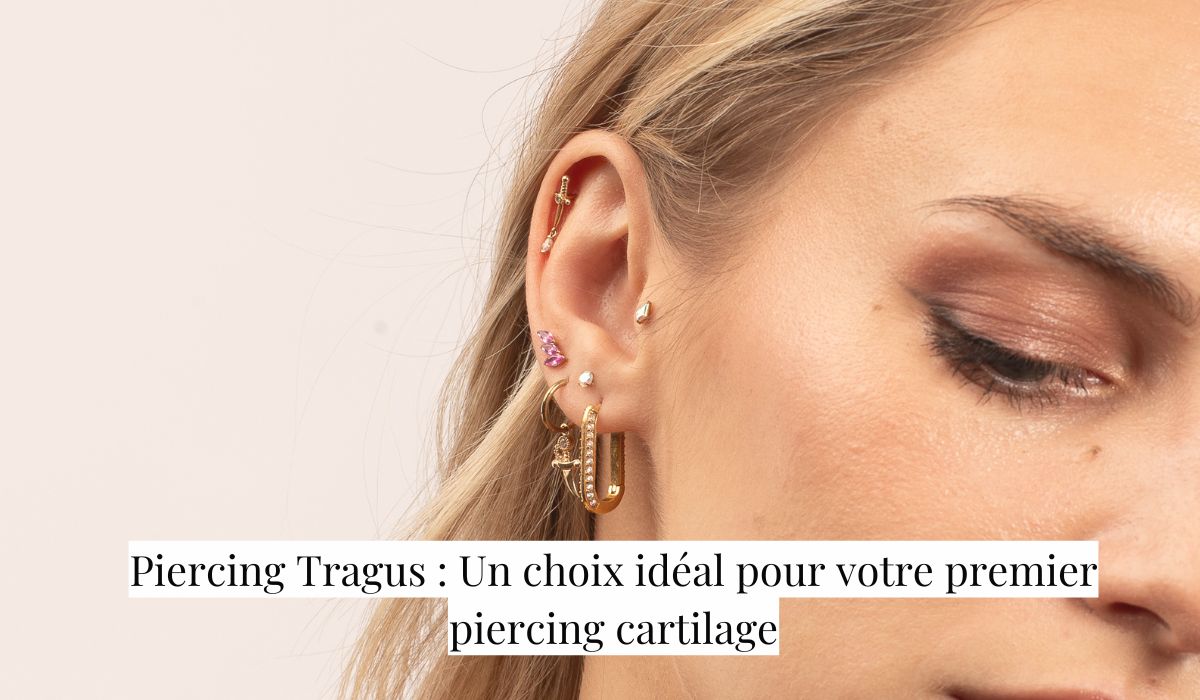
- Tragus: Ideal for a minimalist yet bold look.
- Conch: Original and elegant, perfect for statement jewellery or wide hoops.
- Rook, Daith, Industrial and Anti-Helix: These less common placements let you show off a unique, confident style.

How Do You Choose the Right Placement?
- Your personal style: do you prefer a discreet or a bold look?
- Pain tolerance: the lobe is the least painful, while cartilage placements like the rook or daith take a bit more courage.
- Healing time: if you're after a quick option, the lobe is ideal.
Take the time to think through what you want, talk to a professional piercer, and choose ASTM F-136 titanium jewellery to help avoid any risk of irritation.
2. How Long Does an Ear Piercing Take to Heal?
Average Healing Time by Placement
- Lobe piercing: 6 to 8 weeks, or more.
- Cartilage (helix, tragus, conch): 6 to 9 months or more for full healing
- Complex piercings (rook, daith, industrial): 6 to 9 months or more for full healing
Factors That Affect Healing
- Jewellery material: choose ASTM F-136 titanium to help avoid irritation and support good healing.
- Aftercare and hygiene: daily cleaning is essential.
3. What Type of Jewellery Should You Choose for an Ear Piercing?
Recommended Materials for Your Ear Piercing
- ASTM F-136 Titanium: hypoallergenic and ideal for first-fitting jewellery, ASTM F-136 titanium is also corrosion-resistant, making it a safe, long-lasting choice for everyday wear. Its light weight means optimal comfort, letting you wear it all the time without discomfort, even during everyday activities. This material helps minimise the risk of irritation and allergy, while supporting healthy, quick healing.
- 14-18 Carat Gold: 14-18 carat gold offers an elegant, long-lasting alternative for your ear piercing jewellery. While it's best suited to wear once healing is complete, it shares several benefits with titanium. Corrosion-resistant, it can be worn every day without risk of tarnishing. Its durability makes it a quality choice, and it stays comfortable to wear, even over the long term. That said, be sure to check the purity of the gold to avoid the risk of allergies. Good-quality 14-18 carat gold jewellery is the key to a piercing that's both safe and beautiful.
Which Jewellery for Which Placement?
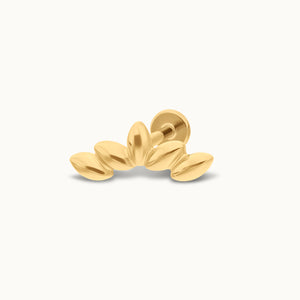
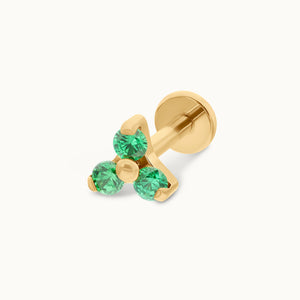
For first-fitting jewellery, the main choice is labret-style pieces, as they offer better stability and support healing. The labret is designed to reduce excess friction and movement that could irritate the pierced area, particularly in cartilage zones like the helix or conch. One notable exception is the daith piercing, which can go straight into a specific style of hoop.
So why not go straight for a hoop in other cases? Hoops, because they move, can create friction and irritation, which complicates and slows healing. Once healing is fully complete, you'll be able to swap the first-fitting jewellery for a hoop or another style that better suits your taste.
4. How Do You Care for an Ear Piercing to Avoid Infection?
Good Daily Habits
Clean the piercing twice a day with saline solution, using a sterile compress to apply it.
Avoid touching the jewellery with dirty hands to help reduce the risk of infection. After showering, gently pat the area dry with a clean sterile compress, avoiding rough towels that could irritate the skin.
It's important to wait until healing is fully complete before swapping the first-fitting jewellery for a new piece, to avoid irritation or complications and not disrupt the healing process.
Other Habits to Avoid
Don't use irritating products like alcohol or peroxide, as they can cause irritation or delay healing.
Avoid sleeping directly on the piercing, as this risks causing irritation, inflammation or even infection. To reduce friction, you can use a special pillow designed for this.
It's also essential to wait until healing is fully complete before swapping the first-fitting jewellery for a new piece, to avoid irritation or complications and not disrupt the natural healing process.
5. How Much Does an Ear Piercing Hurt, by Placement?
Pain ranked by placement. How much an ear piercing hurts depends on the placement you choose. The lobe is generally the least painful option, with a quick, manageable sensation, rated 2 out of 10.
For outer cartilage, like the helix, the pain is moderate, rated around 4 out of 10. Piercings in thicker areas, like the tragus or conch, cause more intense pain, often rated between 5 and 6 out of 10.
Finally, for more complex placements like the rook, daith or industrial piercing, the pain is more noticeable due to the density of the cartilage, reaching around 6 out of 10. That said, it's worth remembering that the pain is temporary and fades quickly once the jewellery is in.
Tips for Managing Pain
Choosing an experienced piercer is essential for a quick, precise and safe piercing. A professional will know how to put you at ease and help reduce discomfort during the process.
To help manage pain, we recommend deep breathing techniques, like inhaling slowly through the nose and exhaling gently through the mouth. This helps you relax and can reduce the sensation of pain.
Finally, keep in mind that the pain felt during the piercing itself is very brief and temporary, lasting just a few seconds, before giving way to a piercing you'll be proud to wear.
Ready to Take the Plunge for Your Ear Piercing?
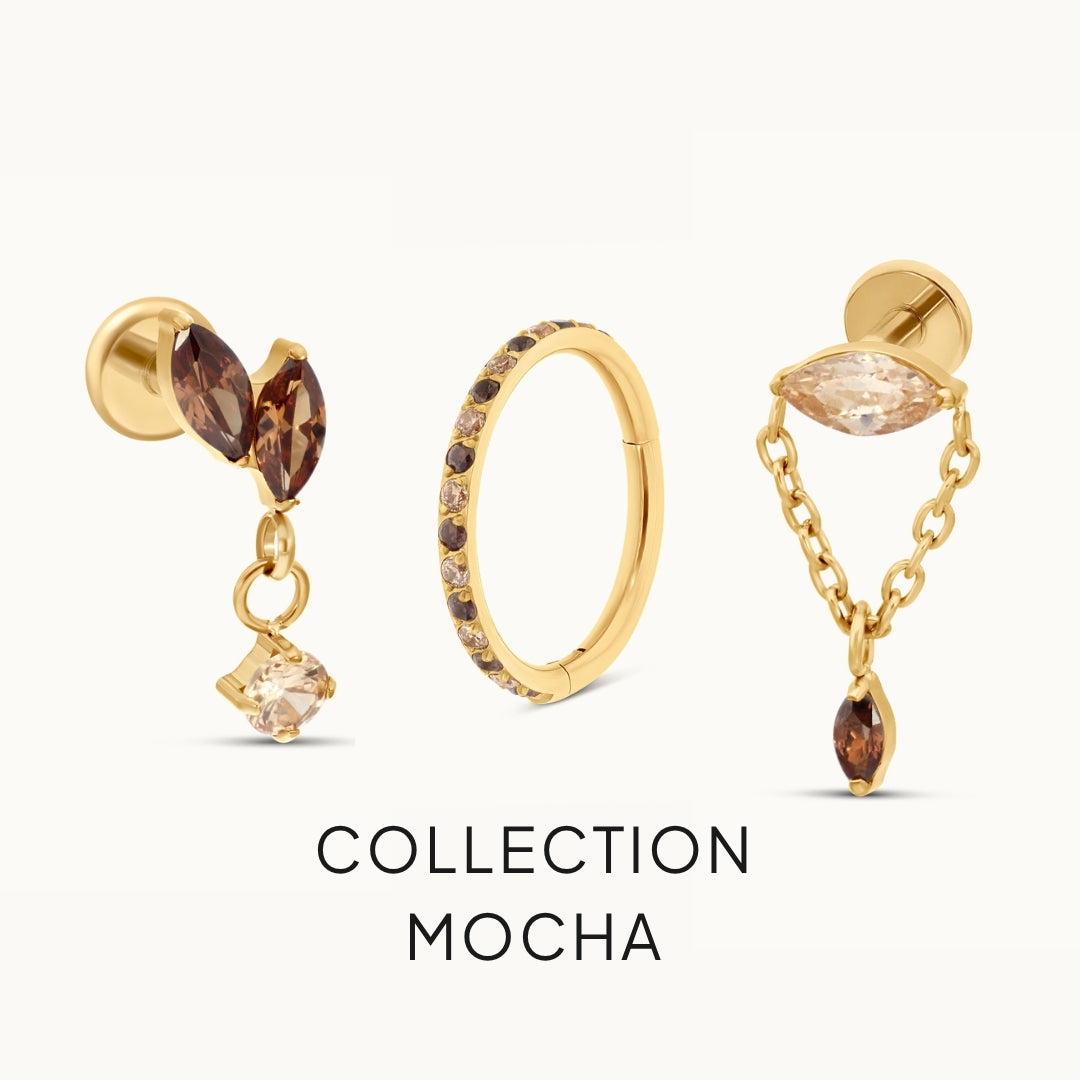
Ear piercings offer a huge choice of placements, styles and jewellery to elevate your look. Take the time to choose the placement that suits you, choose ASTM F-136 titanium jewellery for a safe, elegant piercing, and follow good aftercare habits for optimal healing. Discover our collection of ASTM F-136 titanium jewellery for all your ear piercings!