



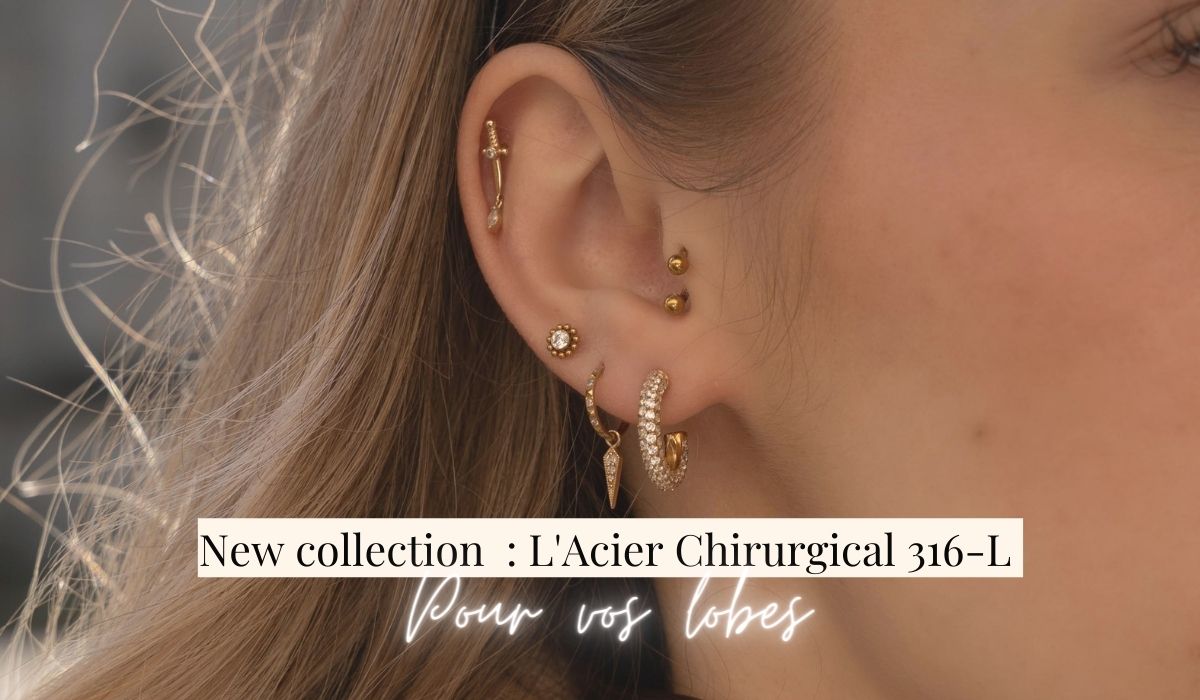
New Collection: 316L Surgical Steel for Your Lobes
Discover Obsidian Piercing's latest addition: an exclusive 316L surgical steel collection, designed with elegance and comfort to elevate your lobes. This premium-quality steel, known for its biocompatibility and durability, now sits at the heart of our new range.
Discovering 316L Surgical Steel
316L surgical steel is a high-quality form of stainless steel, often used in medical applications thanks to its remarkable resistance to corrosion and its durability. It's an ideal choice for piercing jewelry meant to be worn long-term.
Why Choose 316L Steel for Healed Piercings?
Once a piercing is fully healed, you can wear 316L steel. For fresh piercings, or ones still healing, we still recommend ASTM F-136 titanium.
Biocompatibility and Safety
316L steel is biocompatible, making it an ideal choice for healed piercings. It contains a lower nickel content than other steels, and suits people with sensitive skin or a tendency toward allergic reactions. It's a comfortable, dependable choice for long-term wear.
Benefits of 316L Surgical Steel
- Strength and durability: This steel is known for its resistance to corrosion, a real advantage for the lifespan of your jewelry. Skin is exposed to all kinds of environments, so the quality of the material matters.
316L Steel vs. Titanium: Which Material?
The choice between 316L surgical steel and titanium for your piercing jewelry depends on several factors, including how healed your piercing is, your personal design preferences, and your budget.
Cost and Design: 316L Steel vs. Titanium
316L surgical steel and ASTM F-136 titanium differ in both design and cost. Titanium is a hard material to work with, which limits the range of new designs, and it's almost impossible to make earrings from it at an affordable price.
316L surgical steel is generally more affordable than titanium, making it accessible to a wider range of people. This lower cost doesn't come at the expense of quality or style: 316L steel allows for a huge variety of designs.
Titanium for First-Time Piercings
ASTM F-136 titanium costs more, but offers unique advantages. Titanium jewelry can be used as initial jewelry or during healing, unlike 316L steel, which can only be worn once the piercing is fully healed.
Here's why ASTM F-136 titanium is recommended for fresh or healing piercings:
- Its high biocompatibility: ASTM F-136 titanium's key advantage is how well it's tolerated by the human body, so you're very unlikely to have a skin reaction while wearing it.
- Titanium is not only hypoallergenic but also lightweight, reducing the risk of irritation. That makes ASTM F-136 titanium comfortable to wear, while 316L steel is slightly heavier.
Not All Steel Grades Are Equal
Steel grade is an important thing to consider. Not all steel is created equal, and the difference can have a real impact on your experience wearing piercing jewelry.
Why the Steel Grade Matters
Wearing quality materials matters, since piercing jewelry is in direct, prolonged contact with your skin. Some steel grades used for piercing jewelry aren't suited to long-term wear, as their composition can vary and their nickel content can be higher.
Choosing a lower-quality steel can lead to reactions such as irritation, inflammation and infection.
316L Surgical Steel: A Quality Standard
As mentioned, we recommend 316L surgical steel once your piercings are healed and you're after more specific designs. This particular grade is known for its high resistance to corrosion, low reactivity and controlled nickel content, making it ideal for long-term wear, even on sensitive skin.
Be Wary of Lower Grades
Some steel grades, like 304 stainless steel and other lower-cost variants, might look appealing because of their lower price, but they don't offer the same level of biocompatibility or resistance to corrosion.
These lower grades can contain higher levels of nickel or other elements that may trigger allergic reactions, or degrade quickly on contact with skin and moisture.
Wearing piercing jewelry made from the same steel grade as a construction beam is a bit like using a wrench to hang a piece of art on the wall: technically possible, but far from ideal if you want your style to shine with elegance and finesse.
316L surgical steel stands out for its strength, biocompatibility and range of designs, making it an excellent option for already-healed piercings. We still recommend ASTM F-136 titanium jewelry if you're getting pierced or your piercing is still healing. Discover our new earrings collection.

