

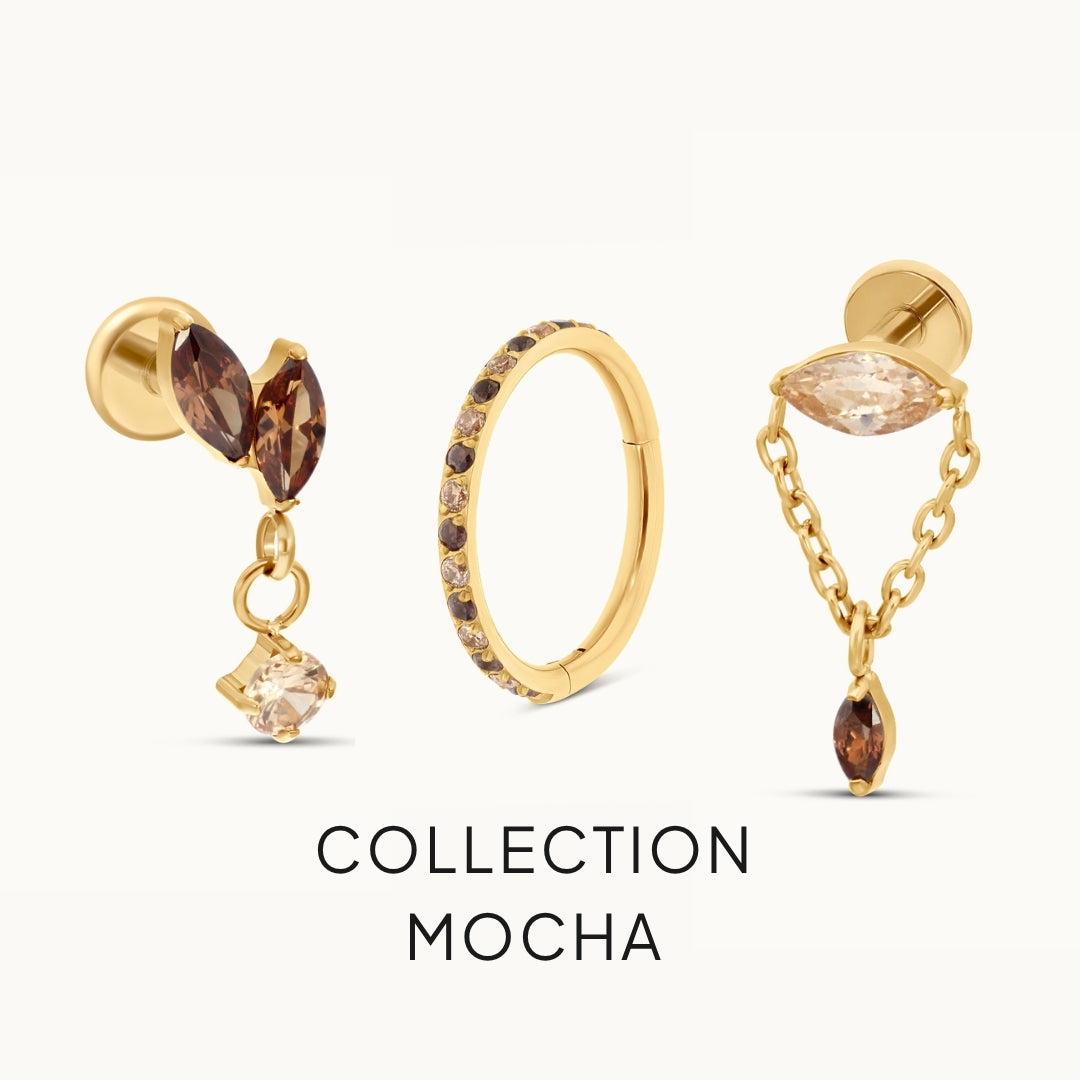


Choosing Your Piercing Jewelry: 5 Mistakes to Avoid
Every year, plenty of people get pierced, but many run into complications because of the jewelry they chose. The wrong material or style can lead to inflammation, irritation, or even infection. In this article, we'll cover the five common mistakes beginners make when choosing jewelry for their first piercing, including the importance of choosing quality materials.
Mistake 1: Choosing the Wrong Material
Choosing the material for your piercing jewelry is about far more than looks, it directly affects your health and wellbeing. Here's why getting it right matters;
The Risks of Low-Quality Materials
- Allergic Reactions: Certain materials, like nickel, are known to cause allergies. Nickel shows up in several materials, like so-called "surgical" steel or silver, which can trigger unpleasant reactions such as inflammation, irritation, or infection. So-called "surgical steel" isn't generally recommended for piercings. Silver, while used in jewelry-making, is among the less pure metals. Most jewelry is made from a mix of various alloys that frequently contain significant amounts of nickel, a well-known metal allergen.
- Infection: Low-quality materials can harbor bacteria, raising the risk of infection.
- Corrosion: Some materials can corrode, which can cause irritation and other skin issues. Corrosion is the process of a metal breaking down through reaction with its environment, often leading to changes in color or texture. For jewelry, this can affect both quality and safety.
Why Choose Quality Materials
- ASTM F-136 Titanium: Titanium is hypoallergenic and corrosion-resistant, making it ideal for piercings. ASTM F-136 titanium can be used as starter jewelry. It's kind to your body.
- 14- and 18-Carat Gold: Always choose gold that's at least 14 carats. Gold is a precious metal that's hypoallergenic (as long as it's nickel-free). It holds up over time, feels great to wear, and adds a touch of elegance to your style.
- Surgical Steel 316L, the only surgical steel that's compatible: good-quality 316L surgical steel is the exception to the rule! This steel is compatible with the human body. That said, it's important to only wear 316L steel once your piercing has healed. That's exactly why we still recommend ASTM F-136 titanium for optimal healing.
For example; Imagine choosing low-quality stainless steel jewelry that contains nickel. At first, everything seems fine, but after a few days, you start noticing itching and irritation. A visit to the doctor confirms you're having an allergic reaction, one that could have been avoided by choosing a better-quality material.
Mistake 2: Ignoring Jewelry Size and Shape
Overlooking the size and shape of your piercing jewelry might seem minor, but it comes with real consequences. Here's what you should know:
Why Size Matters
Jewelry that's too big or too small can slow down healing;
- Too Big: Jewelry that's too large can bump into things or catch on clothing, which can irritate the piercing site and disrupt healing.
- Too Small: On the other hand, jewelry that's too small can sink into the skin, risking complications like infection or the jewelry being rejected.
On top of that, the wrong size can cause pain or irritation when you move.
Why Shape Matters
First off, the shape of your piercing jewelry matters for both looks and anatomy. The jewelry's style should complement the anatomy of your ear, nose, navel, and so on. The shape also needs to suit the pierced area for a harmonious result.
Beyond looks and anatomy, choosing the right shape for your jewelry also helps you avoid the risk of it catching on things. Certain designs can snag on clothing, hair, and more.
Tips for Choosing Well
To make the right choice, don't hesitate to turn to your piercing professional for personalized recommendations. That said, for a first piercing, we recommend a simple, fairly classic shape to help minimize risk.
Check out our size guide: we offer a detailed size guide for piercing jewelry. Feel free to use it for accurate sizing information to make your choice easier.
Mistake 3: Following Trends Alone
It can be tempting to jump on the latest piercing trend, but that can turn out to be a real mistake. Here's why it's worth thinking it through before following the crowd.
The Dangers of Fleeting Trends
- Anatomical mismatch: Not every jewelry style suits every anatomy.
- Complications: Some trendy designs can be harder to clean, raising the risk of infection.
Why Personal Style Matters
- Individuality: Choosing a piercing that matches your personal style is often a better call than chasing a passing trend. A piece of jewelry that reflects who you are is often more rewarding than simply following what's popular right now. A piercing that feels like you will boost your confidence and align with your identity. Trends come and go, but jewelry you truly love will stay timeless in your eyes. That means you're less likely to want to replace it, making it a better investment in the long run.
- Comfort: Jewelry you love will feel more comfortable, not just physically, but emotionally too. You'll be less tempted to take it out, which is good for healing and lowers the risk of complications.
Tips to Avoid This Mistake
- Research: Before committing to a trendy style, do a bit of research to make sure it suits your skin type, your anatomy, and your lifestyle.
- Ask around: Don't hesitate to consult professionals or read reviews online to see whether a particular trend is right for you.
Mistake 4: Neglecting Aftercare for Your Jewelry
Once you have your new piercing jewelry, the work isn't over. Aftercare is crucial for avoiding complications. Here are a few key points to keep in mind:
Why Aftercare Matters
- Preventing complications: Good aftercare helps minimize the risk of inflammation, irritation, or infection.
- Jewelry longevity: Proper care keeps your jewelry in good condition for longer.
Cleaning Your Jewelry
For ASTM F-136 titanium or 14- or 18-carat gold, we recommend;
- Washing your hands before every cleaning
- Cleaning your jewelry with a saline solution or physiological saline.
- Using a sterile gauze pad to clean and dry your piercing (make sure your jewelry is dry afterward, to avoid moisture buildup that encourages bacteria)
Example: You skip aftercare for your cartilage piercing and use an unsuitable cleaner, like alcohol or disinfectant. The result? Inflammation that requires medical attention, extra costs, and delayed healing.
Mistake 5: Cutting Costs vs. Jewelry Quality
Going for cheaper jewelry might seem tempting, but it's a saving that can cost you far more in the long run. Today, the piercing jewelry market spans a huge range of prices.
The Risks of Cheap Jewelry
- Lower-quality materials: These can cause infection or allergic reactions.
- Poor durability: Cheap jewelry can wear out quickly, requiring frequent replacement.
Think of your piercing as an investment! We strongly recommend against jewelry priced under €10.
Don't fall into these common traps when choosing your first piece of piercing jewelry. From material quality to aftercare, every detail counts. Take the time to make an informed choice to avoid complications down the line. Feel free to browse our collection of 14- and 18-carat gold and ASTM F-136 titanium piercing jewelry. Make the perfect choice for your first piercing with the help of our expert guides and advice.

